Category: Buying Guides

  • Banker Bag Sizes Explained: Coin, Currency & Deposit Dimensions

    Banker Bag Sizes Explained: Coin, Currency & Deposit Dimensions

    Banker Bag Sizes Explained: Coin, Currency, and Deposit Dimensions

    Before you order, it helps to know that banker bag sizes are not arbitrary — each dimension maps to a job, from holding a roll of coin to carrying a full day’s deposit or serving as a branded client gift. Order the wrong size and you either can’t close the bag or you’re paying for canvas you don’t need. This guide lays out the standard banker bag sizes, what each is built for, and how firms actually use them.

    Whether you’re a bank stocking cash-handling supplies or a firm speccing a branded gift, matching the size to the use is the single decision that determines whether the bag gets used or shoved in a drawer.

    The standard banker bag sizes

    Banker bags cluster around a handful of common footprints. Coin bags are small and tall to hold weight without splaying; currency bags are wider and shallower to lay bills flat; deposit bags are the largest, sized to swallow a full till. Zip pouches and totes round out the range for documents and gifting.
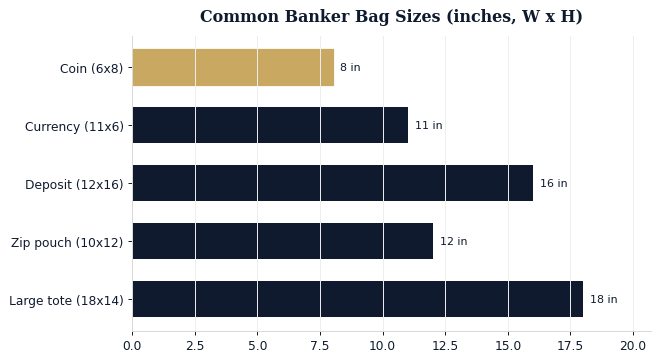
    Common banker bag footprints, from compact coin bags to large totes.
    Common banker bag footprints, from compact coin bags to large totes.

    If you’re unsure, size up slightly: a bag that closes easily with room to spare lasts longer and looks better than one straining at the seams. Overstuffed canvas wears at the stitch lines first.

    How firms actually use each size

    Usage splits across cash handling, gifting, onboarding, and document transport. Banks lean on coin and currency bags for daily operations; law and finance firms lean on totes and zip pouches for client gifts and welcome kits. The mix below reflects what most custom orders are for.
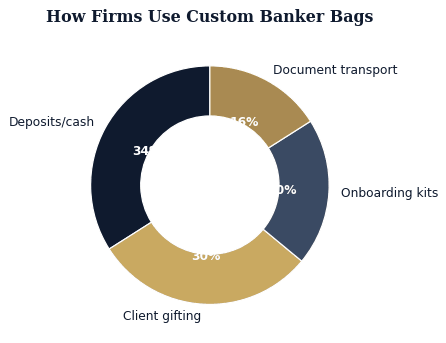
    Custom banker bags serve cash handling, client gifting, onboarding, and document transport.
    Custom banker bags serve cash handling, client gifting, onboarding, and document transport.
    For gifting and onboarding, choose a slightly larger tote in a heavier canvas — it reads as premium and gets reused, which keeps your logo in circulation far longer than a functional deposit bag would.

    Canvas weight and size interact

    Bigger bags need heavier canvas. A large deposit or tote bag in a light canvas will sag and distort; a coin bag in heavyweight duck feels needlessly stiff. Match ounce-weight to size so the bag holds its shape under a realistic load.

    Speccing the right size for your order

    Start from the contents: measure what the bag must hold, add a small margin, then pick the nearest standard footprint. Confirm the closure and whether you need a gusset for depth. For branded orders, leave a clean imprint area on the front panel that your logo can own.

    Bag Typical size Best for
    Coin 6×8 in Rolled coin, small cash
    Currency 11×6 in Flat bills, daily deposit
    Deposit 12×16 in Full till, night drop
    Tote 18×14 in Gifting, onboarding

    Once size is set, closure is the next call — see our companion guide, our Zippered vs Drawstring Banker Bags: A Security & Use-Case Guide. Learn our process on how it works, then get a firm quote for your firm’s order.

    Measuring your contents before you choose a size

    The most reliable way to land on the right banker bag size is to measure what the bag has to hold before you shop. For cash handling, stack the bills or coin rolls you move in a typical run and measure the footprint and height, then add a small margin so the bag closes without strain. For document transport, measure your largest folder or binder flat; for gifting and onboarding, think about the kit contents โ€” a notebook, a bottle, a few smaller items โ€” and size to the bulkiest combination.

    That quick measurement prevents the two classic mistakes: a bag so tight it splits at the seams under a full load, and an oversized bag that wastes canvas and slumps when half full. When a measurement falls between two standard footprints, size up slightly for cash and documents, where a little slack extends life, and size closer to the contents for gifting, where a trim, structured bag looks more premium.

    Materials, hardware, and how they change the size decision

    Banker bag sizes do not exist in isolation from the material and hardware wrapped around them. Heavier canvas holds shape at larger footprints, which is why deposit bags and totes should step up in ounce-weight as they grow; a large bag in light canvas sags and distorts under load. Smaller coin and currency bags can use a mid-weight canvas without feeling flimsy, keeping them easy to handle.

    Hardware scales with size too. Larger bags benefit from reinforced stitching at stress points, wider gussets for depth, and sturdier zippers or drawstrings sized to the opening. For branded totes, a flat front panel and a slightly structured base give your logo a clean canvas and help the bag stand on a desk. Spec the material and hardware alongside the dimensions so the finished bag performs at the size you chose.

    Standardizing sizes across a firm or branch network

    Organizations that buy at scale get the most from a small, deliberate size lineup rather than a different bag for every task. A typical kit is a coin bag and a currency bag for daily cash handling, a deposit bag for end-of-day, and a branded tote for gifting and onboarding. Standardizing on those footprints simplifies reordering, keeps branding consistent, and makes it easy for new branches to order the same set without re-deciding every time.

    A shared spec sheet โ€” footprint, canvas weight, closure, and imprint area for each bag โ€” turns reorders into a one-line request and keeps the whole network on-brand. It also makes budgeting predictable, since per-unit pricing improves as you consolidate volume onto fewer, standardized sizes instead of scattering small runs across many custom footprints. When a new branch opens, it simply orders the same documented set, and your finance team can forecast the spend without re-quoting every line.

    Common questions about banker bag sizes

    What is the difference between a coin bag and a currency bag?

    A coin bag is small and tall so it holds weight without splaying, while a currency bag is wider and shallower so bills lay flat. Choose the coin footprint for rolled coin and small cash, and the currency footprint for daily bill deposits.

    How much bigger than my contents should the bag be?

    Leave a small margin so the bag closes easily with a little room to spare. For cash and documents, err slightly larger to extend seam life; for gifting, keep it closer to the contents for a trim, premium look.

    Does canvas weight need to match the size?

    Yes. Larger bags need heavier canvas to hold their shape under load, while smaller bags can use a mid-weight duck comfortably. Matching ounce-weight to footprint prevents sagging on big bags and needless stiffness on small ones.

    Can one bag work for both deposits and gifting?

    A mid-size tote can stretch across light deposit duty and gifting, but dedicated footprints usually perform better: a structured deposit bag for cash, and a heavier, cleaner tote for branded gifts. Many firms carry both and reserve the premium tote for client-facing use, which keeps the everyday cash bags purely functional and the gift bags looking their best.

    Not sure which size your firm needs?

    Tell us what the bags will carry and we’ll match the size, canvas weight, and branding.
    Get a Firm Quote

  • Custom Banker Bags: A Buyer’s Guide for Banks & Cash Handling

    Custom Banker Bags: A Buyer’s Guide for Banks & Cash Handling

    Custom Banker Bags: A Practical Buyer’s Guide for Cash Handling

    Custom banker bags are the quiet workhorse of any cash operation, moving currency, coin and deposits between the till, the vault and the branch without drawing attention. Whether you run a community bank, a credit union, or a multi-lane retail store, the right bag protects money in transit, speeds reconciliation, and puts your name on every deposit that crosses the counter. This guide walks through the material, closure, security and sizing decisions so you can spec custom banker bags that hold up to daily use and match the way your team actually handles cash.

    Canvas vs. Vinyl vs. Nylon: Match the Material to the Route

    The first decision is the body material, and it comes down to how far and how often the bag travels. Heavy cotton canvas (typically 18oz to 24oz duck) is the traditional choice: it is quiet, tough, and takes a printed or embroidered logo cleanly, which is why most branded deposit bags are canvas. Vinyl and coated fabrics wipe clean and shrug off rain, so they suit armored-car routes and outdoor drop runs. Ripstop nylon splits the difference, staying light for tellers who fill and empty bags dozens of times a shift.

    As a rule of thumb, canvas wins on branding and feel, vinyl wins on weatherproofing and easy cleaning, and nylon wins on weight. For most branch and retail use, a mid-weight canvas with a reinforced base is the sweet spot.

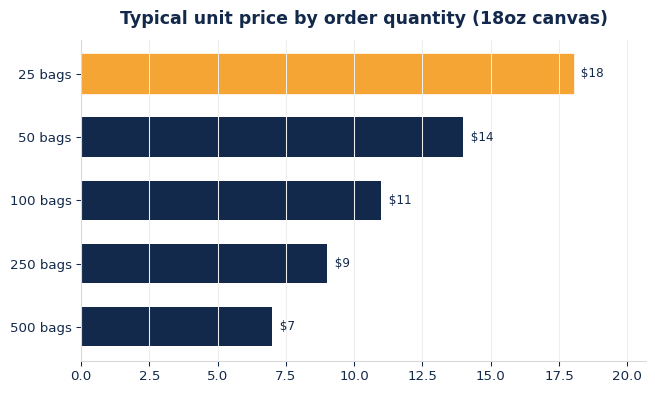
    Typical unit price for custom banker bags by order quantity.
    Typical unit price for a printed 18oz canvas deposit bag as order quantity increases.

    Closures and Security: Zipper, Lock or Tamper-Evident

    How the bag closes decides how much you can trust it unattended. A simple zipper bag is fine for internal transfers where the bag never leaves staff hands. A key or combination locking bag adds accountability when cash moves between people or buildings, since only a supervisor holds the key. For deposits that leave your control, a tamper-evident tote with a serialized security seal is the standard: the seal number is logged at fill and checked on receipt, so any interference is obvious.

    Which to choose

    Match the closure to the weakest point in your chain of custody. Internal-only? A branded zipper bag is enough. Handing bags to a courier or night-drop? Use tamper-evident, single-use seals and record the numbers. Many banks run two systems at once: reusable locking bags inside the branch and disposable tamper-evident bags for outbound deposits.

    Sizing: Coin, Currency and Deposit Formats

    Bag size should follow what goes inside, not the other way around. Coin is dense and heavy, so coin bags are small with a reinforced, often gusseted base that will not blow out under weight. Currency and check deposits ride flat, so a wider zippered wallet or tote shape keeps notes from creasing. If your team preps end-of-day deposits, a medium tote that holds banded straps plus a deposit slip is usually the most-used size.

    Order a spread of sizes rather than one universal bag, and label or color-code them by purpose so a coin bag never gets pressed into deposit duty. Consistent sizing also makes vault shelving and reconciliation faster.

    Bag typeBest contentsTypical closure
    Small coin bagLoose or rolled coinDrawstring or zipper, gusseted base
    Currency walletBanded notes, checksZipper or lock
    Deposit toteEnd-of-day depositsLock or tamper-evident seal
    Transit toteBranch-to-branch transfersLocking, reinforced handles
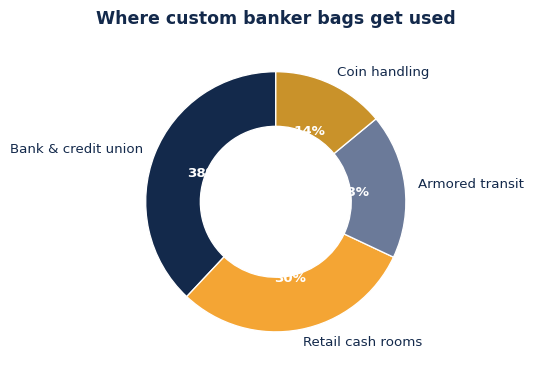
    How custom banker bag orders split across cash-handling use cases.
    How branded deposit bag orders typically split across cash-handling use cases.

    Quantity, Pricing and Lead Time

    Per-bag price falls as volume climbs, because the setup for screen printing or embroidery is a fixed cost spread across the run. The chart above shows how a printed canvas deposit bag trends with quantity; treat the numbers as illustrative ranges rather than a firm quote, since weight, closure hardware and seal serialization all move the figure. Locking and tamper-evident options add cost per unit, and serialized seals are usually priced separately by the box.

    Standard production for a branded run commonly lands in a two-to-four-week window after art approval, with rush options at a premium. Because banks reorder on a schedule, it pays to set a par level per branch and reorder before you hit it rather than scrambling when a size runs out.

    Tip: Standardize on one bag color per purpose across every branch (for example, blue for coin, tan for deposits) and print the branch name or number on the bag. It cuts sorting time at the vault and makes a misrouted bag obvious at a glance.

    Branding That Survives the Wash

    A deposit bag is handled constantly, so branding has to survive abrasion and the occasional cleaning. Screen printing is the most economical for bold, one or two color logos and holds up well on canvas. Embroidery reads premium and resists wear, which suits locking transit bags that stay in service for years. For vinyl, a heat-applied transfer or pad print bonds better than screen ink. Keep the logo simple and high-contrast; fine detail and gradients tend to fade or clog on rugged fabrics.

    Matching the Bag to Your Operation

    The right spec shifts with the setting. A community bank or credit union usually wants durable canvas locking bags for internal transfers plus tamper-evident bags for the night drop, all carrying the institution logo. A retail chain handling many tills leans toward color-coded zipper bags per register and a larger locking tote for the safe. An armored-carrier or courier relationship almost always mandates serialized tamper-evident bags, so confirm their seal and logging requirements before you order.

    Think about reconciliation, too. Bags that are labeled, color-coded and consistently sized make end-of-day counts faster and errors easier to trace, which is worth far more over a year than a few cents saved per bag.

    Common Mistakes to Avoid

    A few predictable errors undercut otherwise sound orders. The first is buying one universal size and forcing coin into a bag that cannot take the weight, which splits seams. The second is choosing a reusable zipper bag for outbound deposits that should be tamper-evident, leaving a gap in the chain of custody. The third is over-designing the logo so it clogs on canvas or peels on vinyl. Finally, buyers forget to serialize and log seals, which defeats the entire point of tamper-evident bags.

    Plan par levels per branch and reorder early, especially before quarter-end and holiday retail peaks when cash volume climbs and deposit bags disappear fastest.

    The Bottom Line

    The best custom banker bags come from three aligned decisions: pick a material that suits the route, choose a closure that matches your chain of custody, and size bags to the cash format they carry. Standardize colors and labeling across branches, keep branding simple enough to survive daily handling, and log your tamper-evident seals. Do that and your bags protect the money, speed reconciliation, and quietly carry your brand on every deposit.

    Ready to spec your custom banker bags?

    Send us your quantities, closure preference and logo, and we will recommend materials, sizes and a production timeline that fits your cash operation.

    Get a Quote

    More reading: browse our full range or learn how we produce custom banker bags. Questions on artwork or quantities? ask for a quote.

  • Custom Canvas Bags for Firms: Printing & Decoration Guide

    Custom Canvas Bags for Firms: Printing & Decoration Guide

    Custom Canvas Bags for Firms: Printing & Decoration Guide

    Every firm that orders branded bags faces the same three decisions, usually without anyone on staff who has made them before: which decoration method, which canvas weight, and where the logo goes. Get those right and your custom canvas bags look like something a managing director hands a client at closing. Get them wrong and they look like conference swag. This guide walks through the production side of the decision โ€” silkscreen versus embroidery, canvas weight in ounces, logo placement, and the cost implications of each โ€” so the person tasked with ordering can brief a supplier like they have done it a dozen times.

    Silkscreen vs. Embroidery: The Core Decision

    Nearly every decorated canvas bag is produced one of two ways, and the choice shapes cost, look, and durability more than any other factor.

    Silkscreen Printing

    Silkscreen (screen printing) presses ink through a mesh stencil directly onto the canvas. It excels at crisp, flat coverage: wordmarks, deal toy motifs, and single-color logos reproduce with sharp edges even at large sizes. Each color requires its own screen, so a one-color print is economical while a four-color design multiplies setup costs. On heavyweight canvas, quality silkscreen holds up through years of use, though high-friction areas can show gentle fading over time โ€” a look many firms actually like, since it reads as heritage rather than wear.

    Embroidery

    Embroidery stitches the logo in thread, producing texture and dimension that photography flattens but hands notice immediately. It signals investment โ€” the same reason it dominates on dress shirts and club blazers โ€” and it will not fade for the life of the bag. The trade-offs: fine serif type below roughly a quarter inch tall loses definition in thread, large solid areas become heavy and pucker lighter fabrics, and per-unit cost runs higher because machine time scales with stitch count.

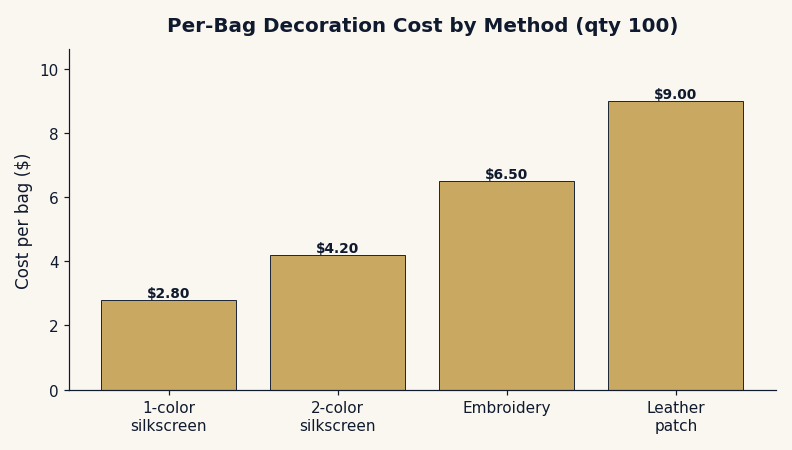
    Bar chart comparing per-bag decoration costs for custom canvas bags across one-color silkscreen, two-color silkscreen, embroidery, and leather patch
    Typical per-bag decoration cost at a 100-unit order. Setup fees are amortized into the unit figures shown.

    A practical rule we give firms: silkscreen for wordmarks and large graphics, embroidery for crests and small emblems. Law firms with engraved-plate style logotypes tend toward one-color silkscreen in a metallic or cream ink; wealth management groups with shield or crest marks tend toward embroidery.

    Canvas Weight: What the Ounces Mean

    Canvas is graded by weight per square yard, and the number tells you almost everything about how the bag will feel and last.

    Canvas weight Feel & structure Typical use Expected service life
    8โ€“10 ozLight, drapes, folds flatConference totes, giveaways6โ€“18 months of daily use
    12โ€“14 ozStructured, stands uprightClient gifts, everyday firm totes3โ€“5 years
    16โ€“18 ozRigid, holds its shape loadedBanker bags, closing gifts, document transport5โ€“10+ years
    20โ€“24 ozBoot-leather stiffnessHeirloom pieces, heavy equipmentA decade or more

    The classic banker bag lives in the 16โ€“18 oz range for a reason: it stands open on a desk while documents go in, shrugs off the corner of a redweld, and develops a patina instead of holes. If your bags will carry closing binders or laptop-plus-files daily, do not go below 14 oz. If they are a conference handout with a one-season life expectancy, 10 oz keeps costs proportionate to the job.

    Procurement tip: Ask your supplier for the canvas weight in writing on the quote. “Heavyweight canvas” is a marketing phrase, not a specification โ€” 12 oz and 18 oz are both sold under that label, and the difference is obvious the moment a partner picks one up.

    Logo Placement: Where the Mark Goes

    Placement affects both how the logo reads and how the bag ages around it.

    • Front panel, centered: The default, and the right answer for most firm totes. Sized at 30โ€“40% of panel width, it reads clearly across a conference room without shouting.
    • Front panel, offset lower-third: A quieter, more fashion-forward placement that pairs well with small embroidered crests. Popular with wealth management and boutique advisory firms.
    • Gusset (end panel): Puts the mark where it shows when the bag sits on a shelf or floor โ€” the placement of choice for document bags that live in file rooms.
    • Under-flap or interior: The understated option: the recipient knows, and that is the point. Increasingly requested for senior client gifts where discretion outranks visibility.

    Whichever placement you choose, insist on a scaled mockup showing the logo on the actual bag dimensions. A mark that looks balanced in a vector file routinely looks undersized on an 18-inch panel.

    Budgeting: Where the Money Actually Goes

    Firms are often surprised that the bag itself is only part of the unit price. Decoration method, canvas weight, and order quantity each move the number meaningfully.

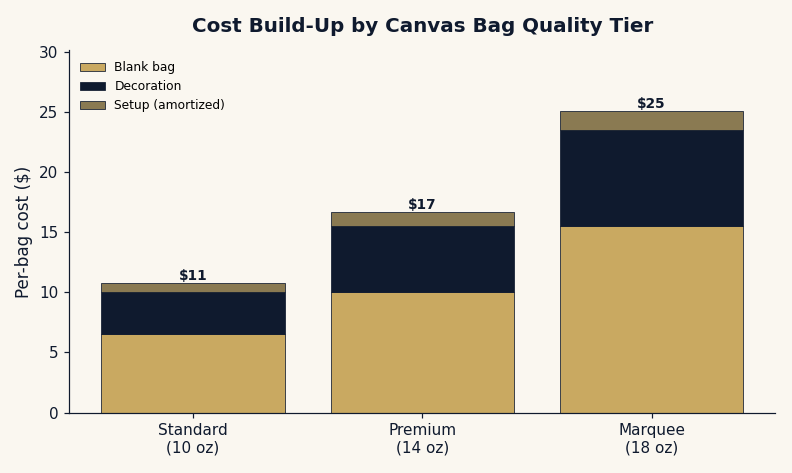
    Stacked bar chart showing how blank bag cost, decoration, and setup fees combine across three custom canvas bag quality tiers
    Typical landed cost per bag at 100 units across three common builds. Heavier canvas raises the blank cost; embroidery raises the decoration cost.

    Two budgeting behaviors separate experienced buyers from first-timers. They amortize setup fees mentally โ€” a $60 screen fee is 60 cents a bag at 100 units, so they never let setup charges push them into a worse decoration method. And they order roughly 10% overage on client-facing programs, because reprinting eight bags to cover new hires costs nearly as much in setup as the original hundred.

    Briefing Your Supplier: A Checklist

    When you request a quote, a complete brief gets you an accurate number the first time. Include: quantity (with reorder expectations), canvas weight, bag dimensions, decoration method and color count, logo files in vector format, placement, and your in-hands date. Suppliers quote conservatively when details are missing โ€” precision saves money.

    If you want to see how this process runs end to end โ€” artwork proofing, pre-production samples, and delivery โ€” our how it works page lays out each step. For sector-specific guidance, we keep dedicated pages for law firms and investment banks, since deal-closing gifts and case-file transport push the specification in different directions.

    And if the bags are destined for new-client programs rather than internal use, pair this guide with our companion piece on client onboarding kits for financial firms โ€” the decoration decisions are the same, but the packaging and presentation layer changes the brief.

    The Bottom Line

    Well-specified custom canvas bags come down to three matched choices: a decoration method that suits your logo’s structure, a canvas weight that suits the bag’s working life, and a placement that suits the setting where the bag will be seen. Firms that nail all three end up with a bag people keep for a decade โ€” which, per impression, makes it one of the cheapest pieces of marketing the firm will ever buy.

    Specify once. Order with confidence.

    Send us your logo and quantities โ€” we return a scaled mockup and firm pricing within one business day.

    Get a Firm Quote