Banker Bag Sizes Explained: Coin, Currency, and Deposit Dimensions
Before you order, it helps to know that banker bag sizes are not arbitrary — each dimension maps to a job, from holding a roll of coin to carrying a full day’s deposit or serving as a branded client gift. Order the wrong size and you either can’t close the bag or you’re paying for canvas you don’t need. This guide lays out the standard banker bag sizes, what each is built for, and how firms actually use them.
Whether you’re a bank stocking cash-handling supplies or a firm speccing a branded gift, matching the size to the use is the single decision that determines whether the bag gets used or shoved in a drawer.
The standard banker bag sizes
Banker bags cluster around a handful of common footprints. Coin bags are small and tall to hold weight without splaying; currency bags are wider and shallower to lay bills flat; deposit bags are the largest, sized to swallow a full till. Zip pouches and totes round out the range for documents and gifting.
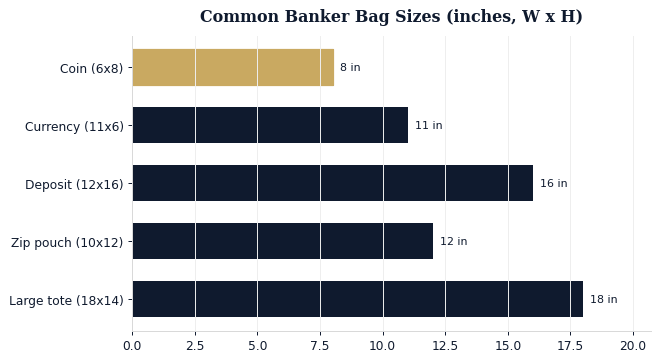
If you’re unsure, size up slightly: a bag that closes easily with room to spare lasts longer and looks better than one straining at the seams. Overstuffed canvas wears at the stitch lines first.
How firms actually use each size
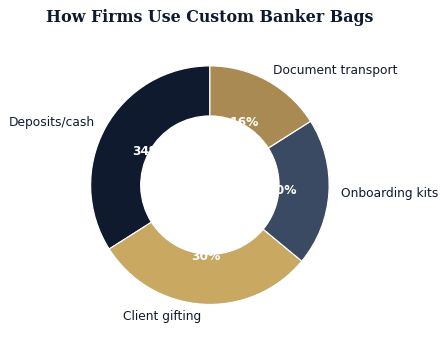
Usage splits across cash handling, gifting, onboarding, and document transport. Banks lean on coin and currency bags for daily operations; law and finance firms lean on totes and zip pouches for client gifts and welcome kits. The mix below reflects what most custom orders are for.
Canvas weight and size interact
Bigger bags need heavier canvas. A large deposit or tote bag in a light canvas will sag and distort; a coin bag in heavyweight duck feels needlessly stiff. Match ounce-weight to size so the bag holds its shape under a realistic load.
Speccing the right size for your order
Start from the contents: measure what the bag must hold, add a small margin, then pick the nearest standard footprint. Confirm the closure and whether you need a gusset for depth. For branded orders, leave a clean imprint area on the front panel that your logo can own.
| Bag | Typical size | Best for |
|---|---|---|
| Coin | 6×8 in | Rolled coin, small cash |
| Currency | 11×6 in | Flat bills, daily deposit |
| Deposit | 12×16 in | Full till, night drop |
| Tote | 18×14 in | Gifting, onboarding |
Once size is set, closure is the next call — see our companion guide, our Zippered vs Drawstring Banker Bags: A Security & Use-Case Guide. Learn our process on how it works, then get a firm quote for your firm’s order.
Measuring your contents before you choose a size
The most reliable way to land on the right banker bag size is to measure what the bag has to hold before you shop. For cash handling, stack the bills or coin rolls you move in a typical run and measure the footprint and height, then add a small margin so the bag closes without strain. For document transport, measure your largest folder or binder flat; for gifting and onboarding, think about the kit contents — a notebook, a bottle, a few smaller items — and size to the bulkiest combination.
That quick measurement prevents the two classic mistakes: a bag so tight it splits at the seams under a full load, and an oversized bag that wastes canvas and slumps when half full. When a measurement falls between two standard footprints, size up slightly for cash and documents, where a little slack extends life, and size closer to the contents for gifting, where a trim, structured bag looks more premium.
Materials, hardware, and how they change the size decision
Banker bag sizes do not exist in isolation from the material and hardware wrapped around them. Heavier canvas holds shape at larger footprints, which is why deposit bags and totes should step up in ounce-weight as they grow; a large bag in light canvas sags and distorts under load. Smaller coin and currency bags can use a mid-weight canvas without feeling flimsy, keeping them easy to handle.
Hardware scales with size too. Larger bags benefit from reinforced stitching at stress points, wider gussets for depth, and sturdier zippers or drawstrings sized to the opening. For branded totes, a flat front panel and a slightly structured base give your logo a clean canvas and help the bag stand on a desk. Spec the material and hardware alongside the dimensions so the finished bag performs at the size you chose.
Standardizing sizes across a firm or branch network
Organizations that buy at scale get the most from a small, deliberate size lineup rather than a different bag for every task. A typical kit is a coin bag and a currency bag for daily cash handling, a deposit bag for end-of-day, and a branded tote for gifting and onboarding. Standardizing on those footprints simplifies reordering, keeps branding consistent, and makes it easy for new branches to order the same set without re-deciding every time.
A shared spec sheet — footprint, canvas weight, closure, and imprint area for each bag — turns reorders into a one-line request and keeps the whole network on-brand. It also makes budgeting predictable, since per-unit pricing improves as you consolidate volume onto fewer, standardized sizes instead of scattering small runs across many custom footprints. When a new branch opens, it simply orders the same documented set, and your finance team can forecast the spend without re-quoting every line.
Common questions about banker bag sizes
What is the difference between a coin bag and a currency bag?
A coin bag is small and tall so it holds weight without splaying, while a currency bag is wider and shallower so bills lay flat. Choose the coin footprint for rolled coin and small cash, and the currency footprint for daily bill deposits.
How much bigger than my contents should the bag be?
Leave a small margin so the bag closes easily with a little room to spare. For cash and documents, err slightly larger to extend seam life; for gifting, keep it closer to the contents for a trim, premium look.
Does canvas weight need to match the size?
Yes. Larger bags need heavier canvas to hold their shape under load, while smaller bags can use a mid-weight duck comfortably. Matching ounce-weight to footprint prevents sagging on big bags and needless stiffness on small ones.
Can one bag work for both deposits and gifting?
A mid-size tote can stretch across light deposit duty and gifting, but dedicated footprints usually perform better: a structured deposit bag for cash, and a heavier, cleaner tote for branded gifts. Many firms carry both and reserve the premium tote for client-facing use, which keeps the everyday cash bags purely functional and the gift bags looking their best.
Not sure which size your firm needs?
Tell us what the bags will carry and we’ll match the size, canvas weight, and branding.