A banker bag is a simple object that is surprisingly easy to order badly. The canvas looks right in a photo, the logo looks sharp on a screen proof, and then the finished bags arrive too flimsy for coin, too small for strapped currency, or printed with type the weave has swallowed. Most of these misfires trace back to a handful of decisions made without the underlying specs. Here are the mistakes that cost a reorder, and the concrete numbers that prevent them, whether you are buying working cash bags for a branch or branded canvas bags as client gifts.
Choosing canvas by look instead of weight
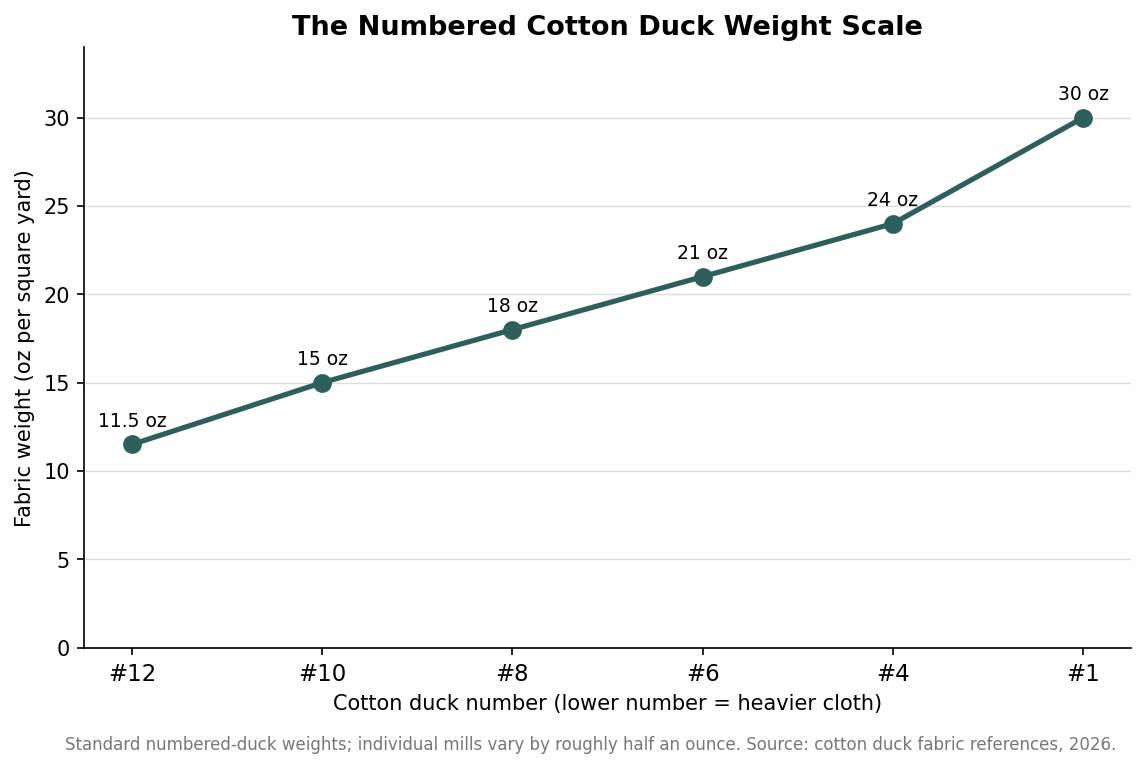
Cotton duck is graded on the numbered, or Army, duck system, and it runs backward from what most people assume: the lower the number, the heavier the cloth. A #12 duck is about 11.5 ounces per square yard, #10 is roughly 14.75 ounces, #8 is about 18 ounces, and it climbs to #4 at 24 ounces and #1 near 30. Ordering by a vague description like heavy canvas invites a mill to ship whatever they have. Specify the number or the ounce weight and you control the result.
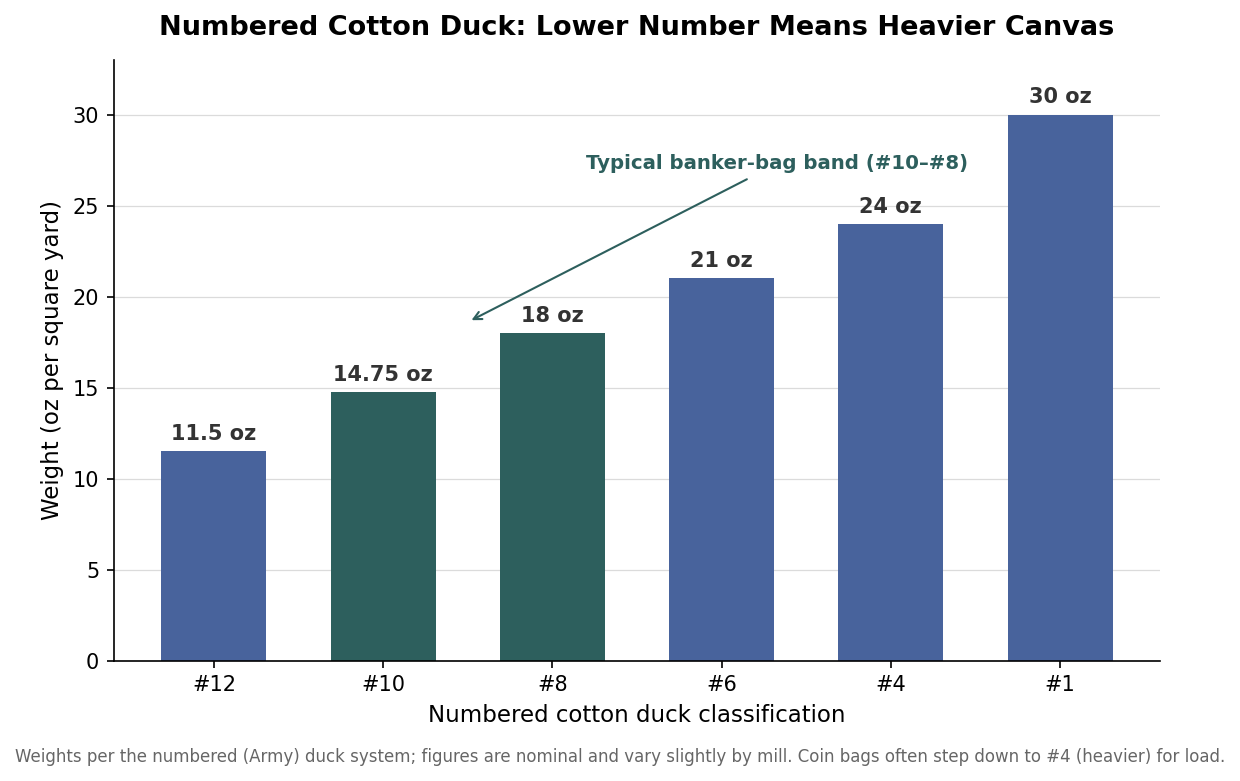
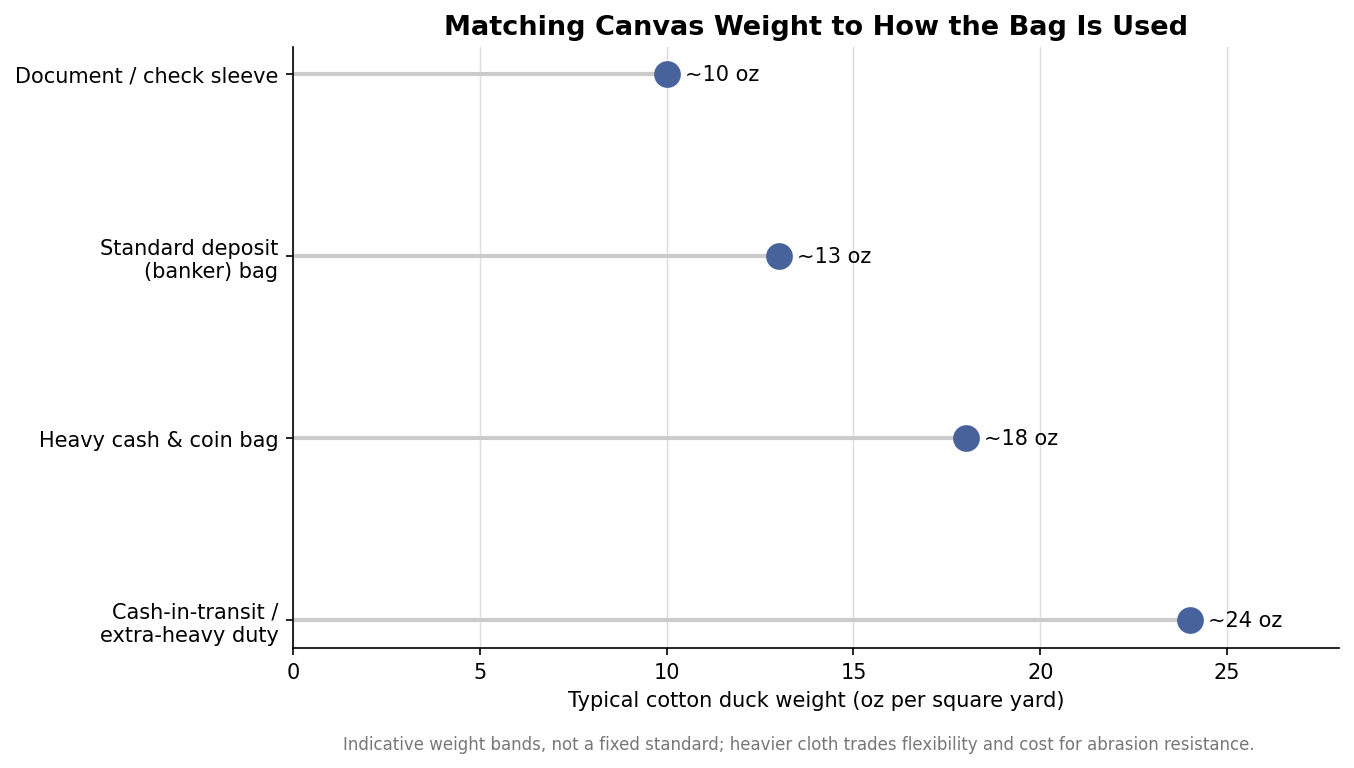
For most branded banker bags, the practical band is #10 to #8, roughly 14 to 18 ounces, which holds a crisp printed shape without feeling like a tarp. Step heavier only when the load demands it. Coin is dense and abrasive, so a coin bag is often better in #6 or #4 canvas around 21 to 24 ounces, where the seams and floor can take the weight. Lighter #12 is fine for a slim document or gift sleeve but will feel cheap as a working cash bag. Match the weight to the job before you fall in love with a color.
Sizing the bag to itself instead of to the contents
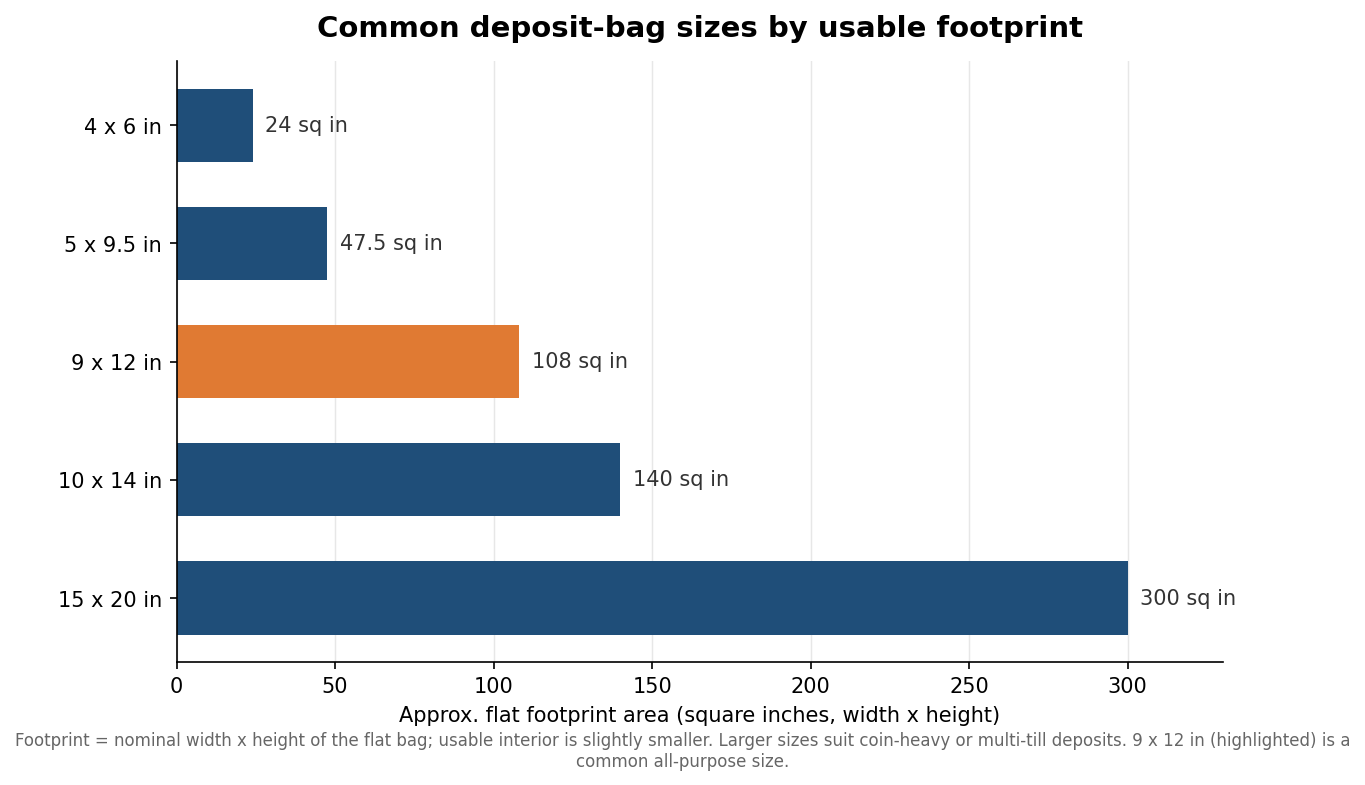
The second common error is picking a size off a chart without measuring what actually goes inside. A US note is 6.14 inches long and 2.61 inches tall, so a currency bag needs an interior clear length of at least six and a quarter inches to let strapped bundles lie flat rather than curl. Rolled coin is only about three inches per roll but stacks heavy. Business checks and letter documents folded in thirds run near eight and a half inches, and a ten-inch tablet in a client onboarding kit needs about nine and a half.
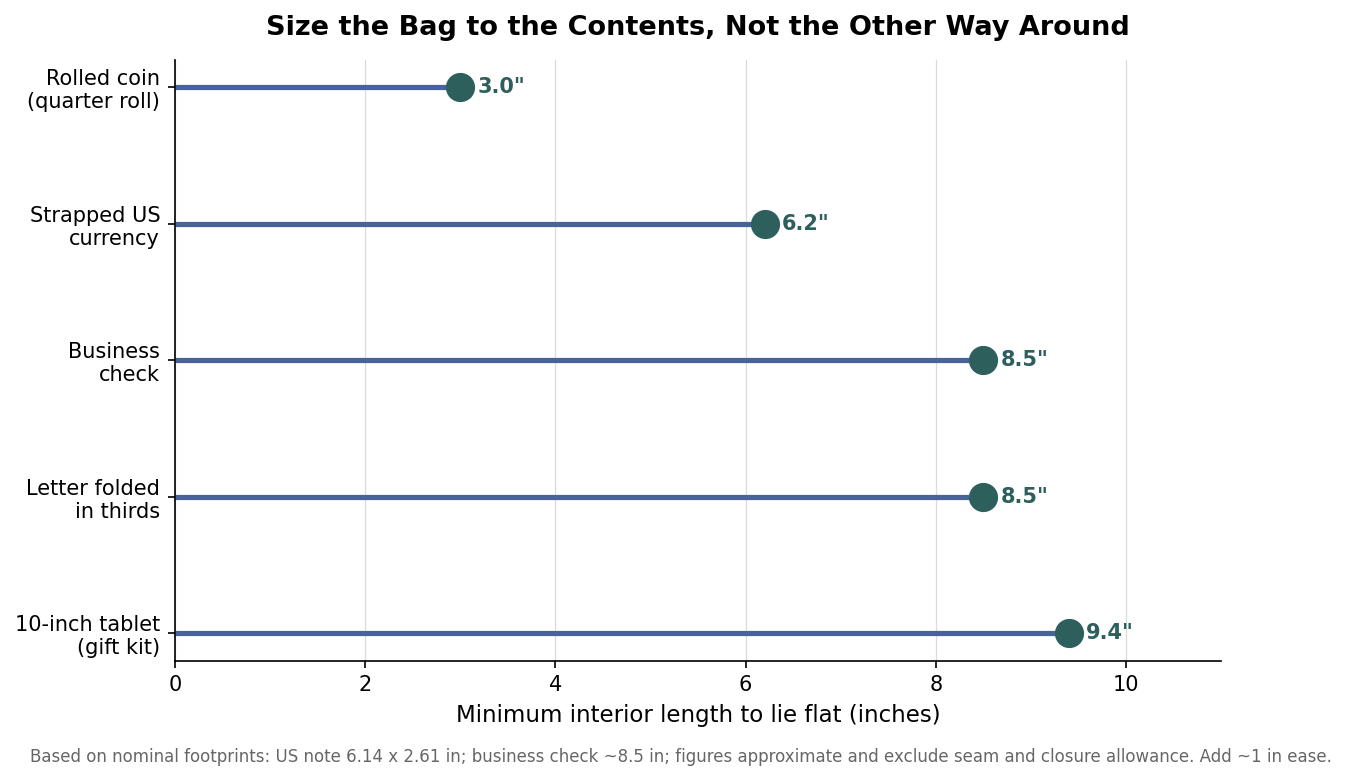
Always add roughly an inch of ease beyond the bare footprint for seams, the closure, and the simple reality that a bag stuffed to its exact interior dimension is hard to open and close. If the same bag has to serve double duty, as a deposit bag on weekdays and a leave-behind gift with a notebook inside, size to the larger content and let the smaller one rattle. Undersizing is the more expensive mistake, because a bag that forces its contents to fold looks and feels wrong no matter how good the canvas is.
Treating the closure as an afterthought
The zipper or drawstring is where a cash bag earns its keep, and it is routinely the last thing anyone specs. Zippers are graded by gauge, and the number roughly reflects the tooth width in millimeters: a #5 coil is light-duty, while a #8 or #10 metal zipper stands up to daily open-and-close and the weight of coin. For anything handling money, ask for a metal zipper in the #8 to #10 range with a pull that can take a numbered tag or a plastic security seal, so the bag supports a basic tamper-evident control. Drawstring closures suit coin and bulk but offer less security unless paired with a seal. Deciding this up front also affects the pattern, because a heavy zipper needs a reinforced top hem to carry it.
Designing artwork the canvas cannot hold
Cotton duck has a visible tooth, and that texture eats fine detail. Small serif type under about eight points, thin hairlines, and subtle gradients tend to break up or fill in when screen printed onto coarse duck. On a #8 or heavier canvas especially, keep the artwork bold and high-contrast, set a minimum line weight, and convert delicate logos to a solid, simplified mark. Where the brand needs to look premium, embroidery and a debossed or stitched leather patch read far better on canvas than a struggling fine-line print, and they hide the weave rather than fighting it. Ask for a physical strike-off on the actual fabric, not just a flat digital proof, before you approve a detailed design.
Ordering waxed canvas and expecting a crisp print
Waxed canvas is popular for its water resistance and its deepening patina, but the wax is a decorating problem. A waxed surface repels water-based inks and can resist adhesion, and heat from curing or pressing softens the wax and moves it around. The clean sequence is to print or embroider first and wax afterward, or to leave a wax-free panel for the logo. If a supplier promises a sharp screen print directly onto an already-waxed bag, treat it as a claim to verify with a sample. Untreated duck simply takes decoration more reliably, so if crisp branding matters more than weatherproofing, start there.
Ignoring minimums and lead time until the deadline
Finally, custom canvas has real production floors that surprise first-time buyers. Custom-decorated bags on stock blanks commonly carry minimums around 50 to 100 pieces, and fully custom construction from scratch runs higher. Lead times swing widely: decorating stock blanks domestically can turn in roughly two to four weeks, while cut-and-sew production overseas often needs eight to twelve weeks or more once sampling and shipping are counted. Treat those as indicative rather than fixed, because they move with season, factory load, and freight. The mistake is not the timeline itself but discovering it a week before a branch rollout or a closing event. Lock the specs, approve a physical sample, and back-plan from the date you actually need bags in hand, and nearly every problem on this list disappears before it can cost you a reorder.