When a banker bag holds up for a decade of daily cash runs, the reason is almost always the cloth. Canvas is easy to take for granted, yet the difference between a bag that frays at the seams in a year and one that softens into a keepsake comes down to a couple of numbers on the spec sheet. Cotton duck, the material most banker bags are cut from, is described by two overlapping systems that confuse first-time buyers: a numbered scale and an ounce weight. Understanding both lets you order the right bag instead of guessing.
What cotton duck canvas actually is
Duck is a plain-woven cotton fabric, tightly constructed so the weave sits flat and dense rather than showing the open grid of a cheap tote. The name has nothing to do with the bird; it comes from the Dutch word doek, meaning cloth. What sets true numbered duck apart is its construction, typically a double-fill or plied-yarn weave that runs two yarns together in the weft. That extra yarn is why duck feels tighter and stronger than a single-ply canvas of the same nominal weight, and it is the reason the fabric has been trusted for tents, mailbags, and workwear for more than a century. For a bag that gets stuffed, dropped, and gripped every day, that density is doing real work: it resists abrasion at the corners and keeps the weave from distorting under load.
The numbered duck scale, decoded
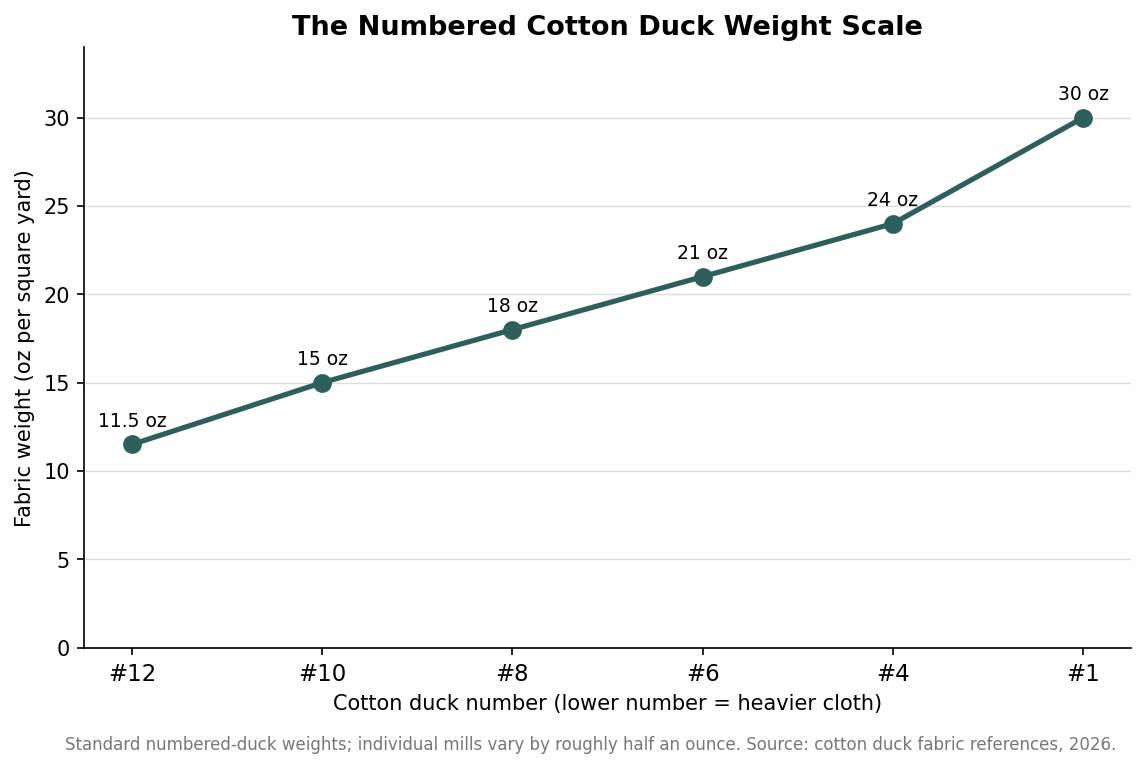
The numbered system is the part that trips people up, because it runs backward. A lower number means a heavier, stronger cloth. On the standard scale, number 12 duck is the lightest at about 11.5 ounces per square yard, and number 1 is the heaviest at roughly 30 ounces. In between, number 10 lands near 15 ounces, number 8 near 18, number 6 near 21, and number 4 near 24. So a supplier who lists a bag as #10 duck is telling you it is a 15-ounce cloth, squarely in the range that suits a hard-working bag. Individual mills vary by around half an ounce, which is why a good spec sheet quotes the ounce weight alongside the duck number rather than relying on the number alone.
Ounce weight is the more universal language, and it is worth learning to read it directly. Roughly speaking, canvas around 7 ounces is lightweight material for pouches, linings, and light apparel. The 10 to 12 ounce band is the everyday middle ground, strong enough for totes and standard bags while staying easy to sew and fold. From 12 to 14 ounces you get the extra body suited to duffels and heavy-duty bags, and 15 to 18 ounces is genuinely heavy cloth built for high-abrasion, high-load use. Above roughly 18 ounces you are into industrial territory, the weight of truck covers and floor cloths, which is more than most bags need and harder to work into clean seams.
Matching weight to the job
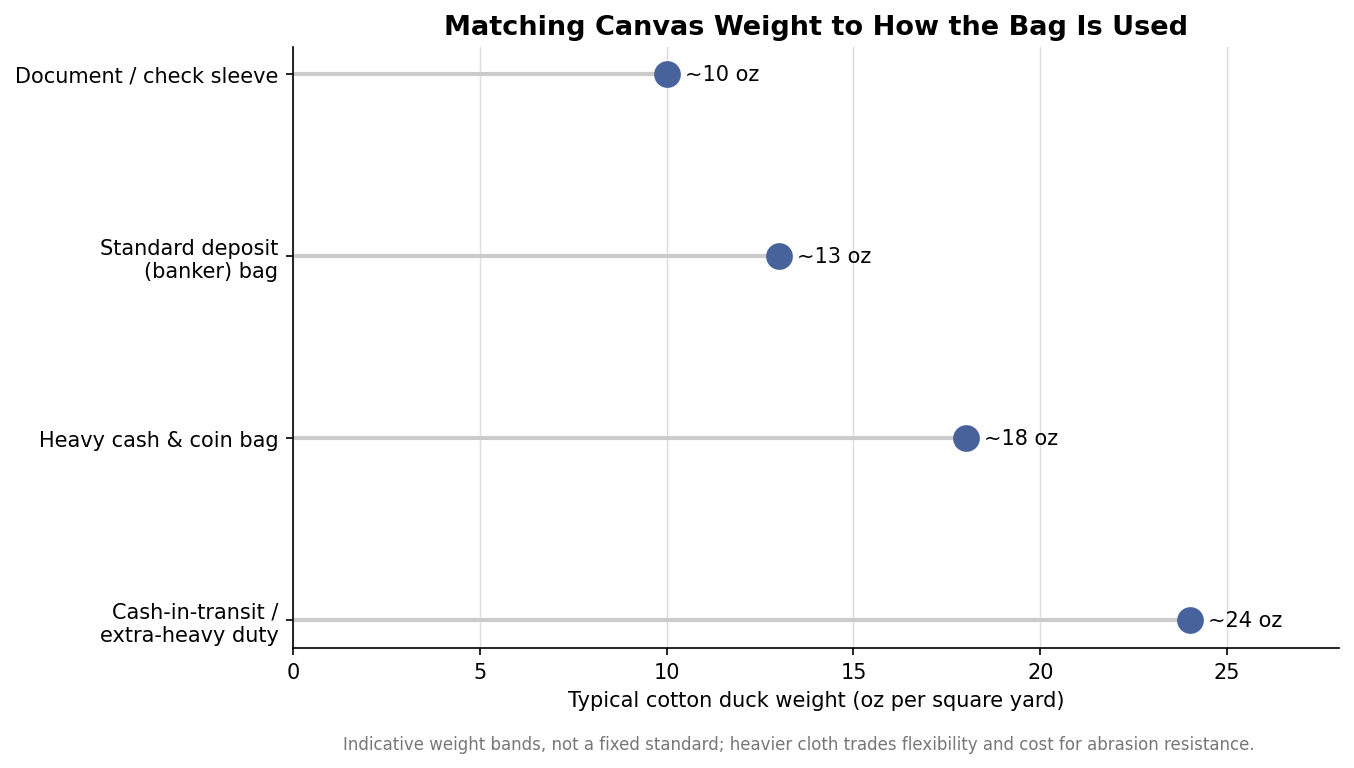
For banker and deposit bags specifically, the useful window sits between about 10 and 18 ounces, and where you land depends on what goes inside. A slim bag meant to carry checks, deposit slips, or documents does its job well in a 10 to 12 ounce cloth that stays light and flexible. A standard deposit bag that sees daily handling is well matched to roughly a 12 to 15 ounce duck, heavy enough to hold its shape and survive being tossed into a drawer or a night drop, light enough to feel manageable. When the bag is built for coin and bulk cash, the added abrasion and weight argue for an 18 ounce cloth, and only genuine cash-in-transit or tool-bag duty justifies pushing toward the 24 ounce extra-heavy grades. The bands below are indicative rather than a fixed standard, but they capture the trade-off: every step up in weight buys abrasion resistance at the cost of flexibility, sewability, and price.
Waxed and treated canvas
Untreated cotton duck is breathable and takes print well, but it is not water resistant, and a soaked canvas bag dries slowly. Waxed canvas answers that by impregnating the cloth with a paraffin or blended wax, which sheds light rain and gives the fabric a characteristic patina that deepens with use. The trade-offs are real and worth stating plainly. Waxed cloth is stiffer, especially when new, adds a little weight, cannot go in a washing machine, and needs periodic re-waxing to keep its water resistance. For an indoor or counter-handled banker bag, untreated duck is usually the better and cheaper choice; for a bag that travels outdoors between locations, a waxed or otherwise treated finish earns its keep. If water resistance matters but you want to avoid wax maintenance, ask suppliers about durable water-repellent treatments, which sit lighter on the hand though they wear off faster than wax.
How weight affects branding and cost
Heavier cloth is not automatically better for decoration. A tightly woven mid-weight duck around 12 to 15 ounces gives screen printing and embroidery a stable, flat surface without the bulk that makes very heavy canvas awkward to hoop or press. Extremely heavy grades can resist crisp fine-line printing and add cost in both material and shipping weight, so specifying the heaviest cloth available is rarely the smart default. The right move is to choose the lightest weight that comfortably survives the intended load, then let the print method follow from there.
Specifying canvas with confidence
When you request a quote, name three things: the ounce weight or duck number you want, whether the cloth is untreated or waxed, and the load the bag will carry day to day. Those details tell a supplier far more than the word canvas on its own, and they let you compare quotes on equal footing instead of discovering after delivery that one vendor’s bag is a flimsy 8 ounce cloth and another’s is a stiff 18 ounce industrial grade. Where possible, ask for a fabric swatch or a sample bag and handle it before committing to a run. A minute spent feeling the weave and checking the seams will tell you more about how the bag will age than any product photo, and it turns a vague material into a decision you can stand behind.