Zippered vs Drawstring Banker Bags: A Security and Use-Case Guide
The closure is where security and speed trade off, which makes zippered bank bags versus drawstring the second real decision after size. Zippered bags — especially locking versions — protect contents and deter casual tampering; drawstring bags open and close in a second and cost less. This guide compares the two so you can match the closure to how the bag is actually used.
There’s no universally right answer. A night-deposit run has different needs than a branded onboarding tote, and the best firms often carry both.
Zippered vs drawstring: the trade-offs
Zippered bank bags win on security and gifting feel, while drawstring wins on speed and cost. Durability is close, though a quality zipper outlasts a frayed drawstring channel over years of heavy use. The scores below summarize how the two closures compare on the criteria buyers weigh.
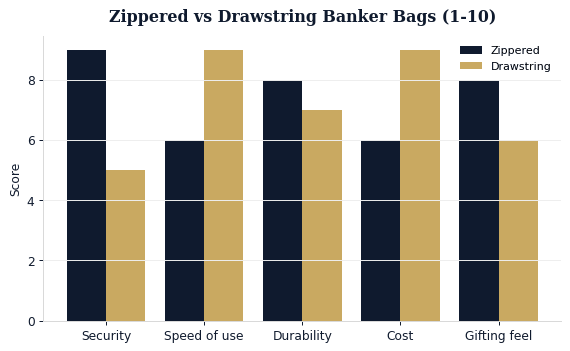
For anything holding cash or sensitive documents, a zipper — ideally lockable — is worth the small premium. For internal transport, supply organization, or gifting where security isn’t the point, drawstring is faster and cheaper.
Matching closure to use case
Cash deposits and controlled documents call for zippered, lockable bags with a tamper-evident option. Coin transport and internal moves are fine with drawstring. For client gifts and onboarding kits, choose based on the impression you want: a zipper feels more finished and premium, a drawstring tote feels casual and everyday.
Zipper quality matters
Not all zippers are equal. Heavy-gauge metal or reinforced nylon coil zippers with a lockable pull hold up far better than a light plastic tooth under daily strain. If you’re paying for security, pay for the zipper that delivers it.
Cost by quantity
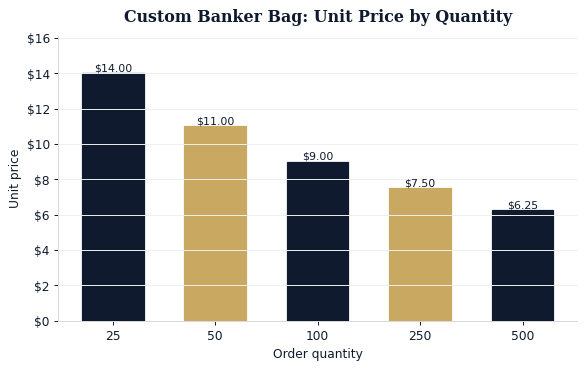
Both closures get cheaper per unit with volume, and the gap between them narrows at scale. The curve below shows typical custom banker-bag pricing as quantity rises — useful for budgeting a firm-wide order.
| Use case | Recommended closure | Why |
|---|---|---|
| Cash deposits | Zippered, lockable | Security, tamper-evidence |
| Coin/internal transport | Drawstring | Speed, low cost |
| Client gifts | Zippered tote | Premium feel |
| Onboarding kits | Either | Match to brand tone |
Still deciding on dimensions? Start with our companion guide, our Banker Bag Sizes Explained: Coin, Currency & Deposit Dimensions. See how it comes together on how it works, then get a firm quote for your firm.
Compliance, chain of custody, and record-keeping
For regulated cash handling, the bag is part of a documented process, and the closure you choose should support it. Zippered bags that accept a lock and a numbered, tamper-evident seal let staff record the seal number at close, so any interference is visible on receipt. Pairing that with a simple log — bag serial, seal number, amount, and handler — creates a clean chain of custody that stands up to audit and reduces disputes over shortages.
Drawstring bags rarely fit this role because they cannot be sealed reliably, which is why they stay on the internal side of the workflow. When you are choosing closures for a branch or firm, map each step of your cash journey and assign the closure that matches its risk: sealed zippers where money is controlled and counted, quick drawstrings where materials simply move from one desk to another.
Security features beyond the basic closure
The zipper-versus-drawstring choice is the headline, but the security details underneath matter just as much for cash handling. Lockable zipper pulls accept a keyed or combination lock, turning the bag into a controlled container; tamper-evident numbered seals let you verify at a glance whether a bag was opened in transit. Some deposit programs pair a zippered bag with a printed serial or barcode so each bag is trackable through a chain of custody. If your bag is part of a cash-control process, these features do more work than the closure alone.
Drawstring bags can carry light security touches too — a toggle lock or a seal loop — but they are fundamentally quick-access containers rather than secured ones. That is exactly why they shine for internal transport and organization, where speed matters and the contents are not sensitive. Match the security layer to the sensitivity of what the bag carries, not to a blanket rule.
Durability, maintenance, and total cost of ownership
Over years of daily use, the closure is often what fails first, so build quality there drives the real cost of ownership. A heavy-gauge metal or reinforced nylon-coil zipper with a robust pull outlasts a light plastic tooth by a wide margin, and it is worth the small premium on any bag opened and closed dozens of times a day. Drawstrings fail differently — fraying at the channel or a worn toggle — so a bag with a replaceable cord and reinforced eyelets extends its life cheaply.
Maintenance is minimal but real: keep zippers free of grit, occasionally run a little zipper lubricant on heavily used bags, and inspect drawstring channels for wear. Choosing a bag whose closure and stitching are built for your usage volume means fewer replacements, which usually outweighs a lower sticker price on a flimsier bag.
Matching closure to workflow and staff habits
The best closure also fits how your people actually work. If tellers or staff open and close a bag many times per shift, a smooth zipper or a quick drawstring that does not snag keeps the line moving; a fussy closure gets propped open, which defeats its purpose. For end-of-day deposits handled once and secured, a lockable zipper’s slower operation is a non-issue and its security is the point.
Consider ergonomics and gloves, too: larger pulls and toggles are easier to operate quickly and in cold conditions. Piloting a small batch with the team before a full rollout surfaces these workflow details early, so the bag you standardize on is one staff will use correctly every time rather than working around.
Common questions about banker bag closures
Are zippered bank bags worth the extra cost?
For anything holding cash or sensitive documents, yes — a zipper, ideally lockable, protects contents and deters casual tampering for a modest premium. For internal transport and organization where security is not the concern, drawstring is faster and cheaper and a better fit.
Can drawstring bags be made secure?
Drawstring bags accept light touches like a toggle lock or seal loop, but they remain quick-access containers rather than truly secured ones. When you need controlled access or tamper evidence, choose a lockable zippered bag.
Which closure lasts longer?
Durability is close, but a quality metal or reinforced nylon-coil zipper generally outlasts a drawstring channel under heavy daily use. Whichever you choose, a replaceable cord or a heavy-gauge zipper and reinforced stitching are what determine real longevity.
Should a firm standardize on one closure?
Most firms are best served by both: lockable zippered bags for deposits and controlled documents, and drawstring bags for coin, internal moves, and non-sensitive gifting. Standardizing the closure by use case keeps costs down and staff habits consistent.
Choosing the right closure for your firm?
We’ll match zippered or drawstring bags to your use case, security needs, and branding.