📞 Call or Text us: (929) 605-4397

Category: Buyer Guides

  • Custom Banker Bags 101: Canvas Weights, Sizes and Branding for Firms

    Custom Banker Bags 101: Canvas Weights, Sizes and Branding for Firms

    Custom Banker Bags 101: Canvas Weights, Sizes and Branding for Firms

    Custom banker bags look simple, but the difference between a bag a client carries for
    years and one that frays by spring comes down to three specs: canvas weight, size, and branding method. If
    your firm is ordering custom banker bags for closing gifts, recruiting, or corporate gifting, getting these
    right is what separates a keepsake from a giveaway. Here’s how to spec a bag that earns its place on a
    client’s shoulder.

    Canvas weight: the number that matters most

    Canvas is measured in ounces per square yard. Lightweight totes start around 10 oz; serious, structured
    bags use 16 oz and up. Heavier canvas holds its shape, survives daily document loads, and ages well instead
    of going limp.
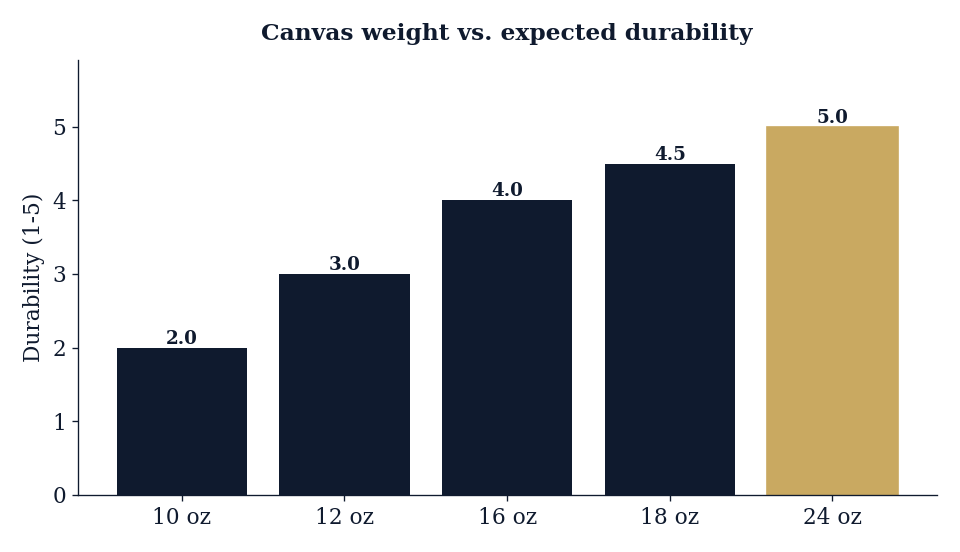
    For a gift meant to last, 16 oz canvas is the practical floor.
    For a gift meant to last, 16 oz canvas is the practical floor.

    For promotional, high-volume runs, 10–12 oz keeps costs down. For partner gifts and closing presents,
    step up to 16–18 oz so the bag still looks sharp years later.

    Size: match the use, not the trend

    A banker bag that’s too small frustrates; too large feels bulky. Most firm orders land in two or three
    sizes depending on what the recipient actually carries.
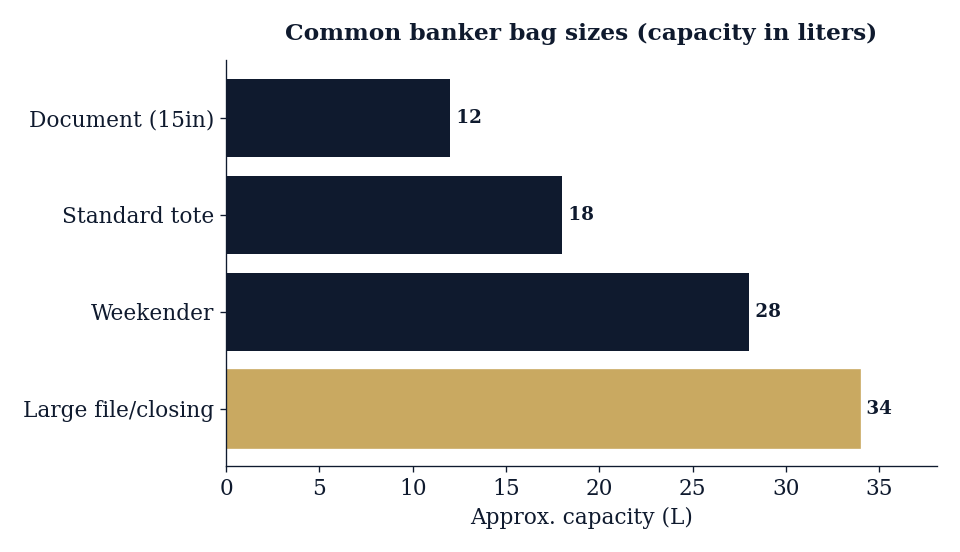
    Document and standard sizes cover most firm gifting; weekenders suit retreats and recruiting.
    Document and standard sizes cover most firm gifting; weekenders suit retreats and recruiting.
    • Document (≈15″): files, a tablet, a legal pad — ideal for closings and daily court use.
    • Standard tote: the everyday workhorse for associates and clients.
    • Weekender: recruiting, firm retreats, and MBA welcome bags.

    Branding: print, embroider, or patch

    How you decorate the bag changes both its cost and how premium it feels. Screen printing is crisp and
    economical; embroidery feels executive; a woven patch splits the difference with a tailored, heritage look.
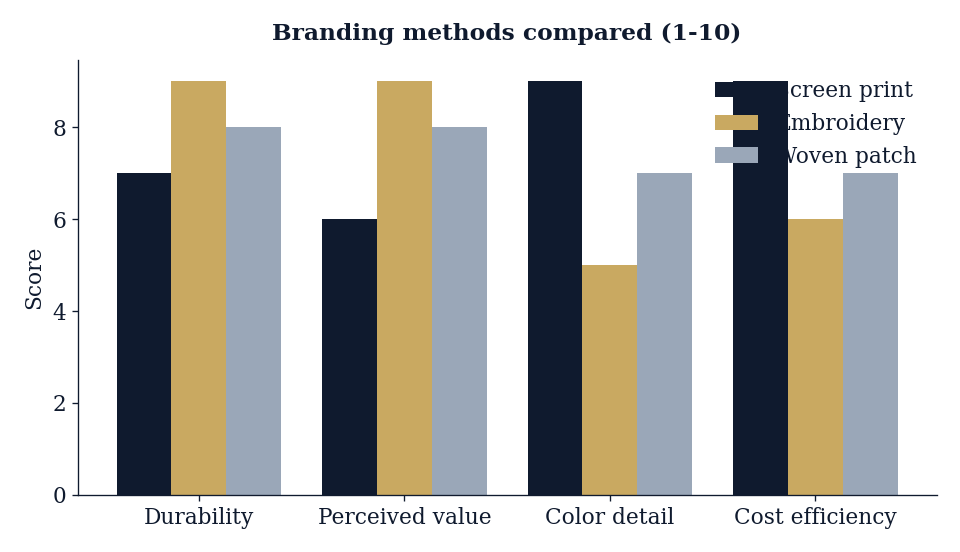
    Embroidery reads most premium; screen print wins on color detail and cost.
    Embroidery reads most premium; screen print wins on color detail and cost.
    Rule of thumb: screen print for volume and bright logos, embroidery for partner-level gifts, woven patch when you want a refined, understated mark.

    Spec’ing your order: a quick checklist

    1. Decide the job first

    Closing gift, recruiting bag, or event swag? The job sets the weight, size, and budget before you look
    at colors.

    2. Lock brand colors

    Supply exact thread or ink colors. A slightly-off navy undermines a firm’s whole identity.

    3. Order a pre-production sample

    For any meaningful quantity, approve a physical sample. Canvas color and stitch density read differently
    in hand than on screen.

    4. Plan lead time

    Embroidered, structured bags take longer than printed totes. Order well ahead of a closing season or
    recruiting cycle.

    Choosing what to actually give? See our guide to client appreciation gifts that don’t end up in a drawer, or compare options for accounting-firm gifting.

    Bottom line

    Great custom banker bags aren’t complicated — they’re just specified with intent. Choose 16 oz canvas or
    heavier for gifts meant to last, pick a size that matches what the recipient carries, and decorate in a
    method that fits the occasion and budget. Do that, and your firm’s bag becomes the one that’s still on a
    client’s shoulder long after the matter closes.

    Spec your firm’s banker bags

    Send your quantity, size, and branding preference — we’ll quote it and send a sample.

    Get a Firm Quote

    How it works ·
    Investment banks · Get a quote

  • Heritage vs. Modern: A Buyer Guide to Banker Bag Construction

    Heritage vs. Modern: A Buyer Guide to Banker Bag Construction

    A practical buyer’s guide to banker bag construction for finance, legal, and corporate-gifting buyers. The decisions that actually affect how the bag looks, feels, and survives, ranked from “matters a lot” to “marketing fluff.”

    What heritage means in this context

    “Heritage” is a marketing word that has been applied to so many products it has lost meaning. In banker bag construction it has a specific definition: a heritage-spec bag uses materials and construction methods that match what the original banker bags looked like in the early twentieth century — heavyweight cotton canvas, brass hardware, leather trim, and cotton-webbing handles. Modern-spec bags use lighter polyester blends, plastic hardware, faux leather, and synthetic webbing.

    Both can be well-made. But they read differently in the hand, age differently, and signal different things about the firm that bought them.

    Canvas weight: the single most important spec

    Canvas weight is measured in ounces per square yard. The most common weights are:

    • 10–12oz: Lightweight, used for promotional totes. Will not last more than a year of daily use.
    • 14–16oz: Mid-weight, used in mass-market canvas bags. Adequate for occasional use, not for daily commute.
    • 18oz: The heritage banker bag standard. Structured, pre-washed for drape, holds shape after years.
    • 22oz: Premium weight, used in heritage-leaning builds with leather trim. Heavier than a leather briefcase but holds more.

    If your bag is going to be carried daily for years, anything under 18oz is a false economy.

    Hardware: brass vs. nickel vs. plastic

    Hardware reads from across the room. Solid brass or antique-brass hardware (snaps, rivets, D-rings) is the heritage standard. Nickel and chrome are modern alternatives that signal “industrial” rather than “intentional.” Plastic hardware appears on promotional bags and signals “promo” regardless of the canvas quality.

    For a partner-level gift, specify solid brass hardware. The cost difference is roughly $2–$4 per bag and it changes how the bag reads in a partner’s office.

    Macro photo comparing brass-tone hardware on heavyweight canvas versus chrome plastic hardware on lightweight canvas
    Image placeholder

    Decoration: embroidery vs. screen-print vs. heat transfer

    Three decoration methods dominate the industry. Each has a different look, durability, and price point.

    Embroidery

    Stitched directly into the canvas. Survives indefinitely. Reads as heritage and “intentional.” Best for logos with limited color counts and clean geometric shapes. Tone-on-tone embroidery (thread matched to canvas) is the partner-gift standard.

    Screen-print

    Ink applied through a screen, baked onto the canvas. Survives 5–10 years of normal use. Better for logos with many colors, gradients, or photographic detail. Reads more modern than embroidery.

    Heat transfer

    A printed film pressed onto the canvas with heat. Survives 1–2 years before cracking. Avoid for any premium application. Only acceptable on high-volume conference giveaways where the bag is expected to be disposable.

    Handles and webbing

    The handle is the part that fails first on a poorly built bag. Heritage bags use cotton webbing reinforced with a leather wrap at the attachment point, or full leather handles riveted through the canvas. Lower-spec bags use polyester webbing with stitched-only attachment — these tear out within a year of daily use carrying a laptop.

    Key takeaway

    Spec for the spec choices that matter (canvas weight, hardware finish, decoration method, handle attachment) and ignore the marketing fluff (eco-friendly inks, “vegan leather” claims, recycled-content percentages under 30%). A well-made 18oz heritage canvas bag with brass hardware and embroidered logo will outperform any “premium organic recycled” lightweight tote on every measurable metric.

    Lining: when it matters

    Most banker bags are unlined — the interior is the inside face of the canvas. For premium and law-firm builds, a contrast lining (waxed cotton, herringbone, or houndstooth) elevates the bag and adds structure. Lining adds roughly $8–$15 per bag at quantity.

    Closure: the function-vs.-form decision

    Open-top bags are the original banker spec and feel the most heritage. Zip closures are functional but read more modern. Snap closures split the difference. Leather-trim flap closures with a buckle are the top tier — only used on the premium partner-gift builds.

    The final test

    Before approving the spec, request a single pre-production sample. Hold the bag in the hand. Try the closure. Load it with a laptop. If the bag feels like a working object you would carry yourself, it will land with the recipient. If it feels like swag, it will land like swag.

    Ready to spec a heritage banker bag?

    We will recommend the right canvas weight, hardware, and decoration for your audience and quantity. Free mockups within one business day.

    Get a Quote

Our Family of Brands