📞 Call or Text us: (929) 605-4397

Author: Custom Banker Bags

  • Custom Banker Bags 101: Canvas Weights, Sizes and Branding for Firms

    Custom Banker Bags 101: Canvas Weights, Sizes and Branding for Firms

    Custom Banker Bags 101: Canvas Weights, Sizes and Branding for Firms

    Custom banker bags look simple, but the difference between a bag a client carries for
    years and one that frays by spring comes down to three specs: canvas weight, size, and branding method. If
    your firm is ordering custom banker bags for closing gifts, recruiting, or corporate gifting, getting these
    right is what separates a keepsake from a giveaway. Here’s how to spec a bag that earns its place on a
    client’s shoulder.

    Canvas weight: the number that matters most

    Canvas is measured in ounces per square yard. Lightweight totes start around 10 oz; serious, structured
    bags use 16 oz and up. Heavier canvas holds its shape, survives daily document loads, and ages well instead
    of going limp.
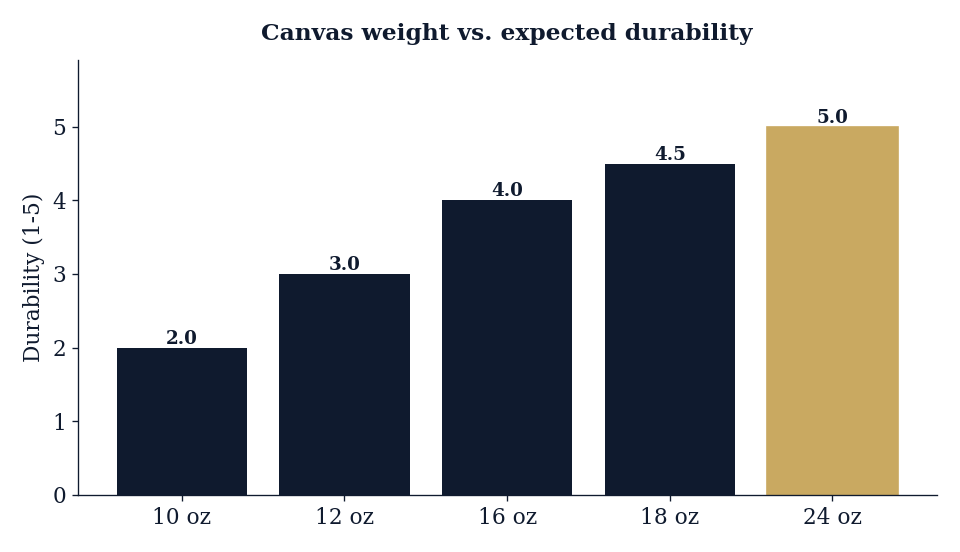
    For a gift meant to last, 16 oz canvas is the practical floor.
    For a gift meant to last, 16 oz canvas is the practical floor.

    For promotional, high-volume runs, 10–12 oz keeps costs down. For partner gifts and closing presents,
    step up to 16–18 oz so the bag still looks sharp years later.

    Size: match the use, not the trend

    A banker bag that’s too small frustrates; too large feels bulky. Most firm orders land in two or three
    sizes depending on what the recipient actually carries.
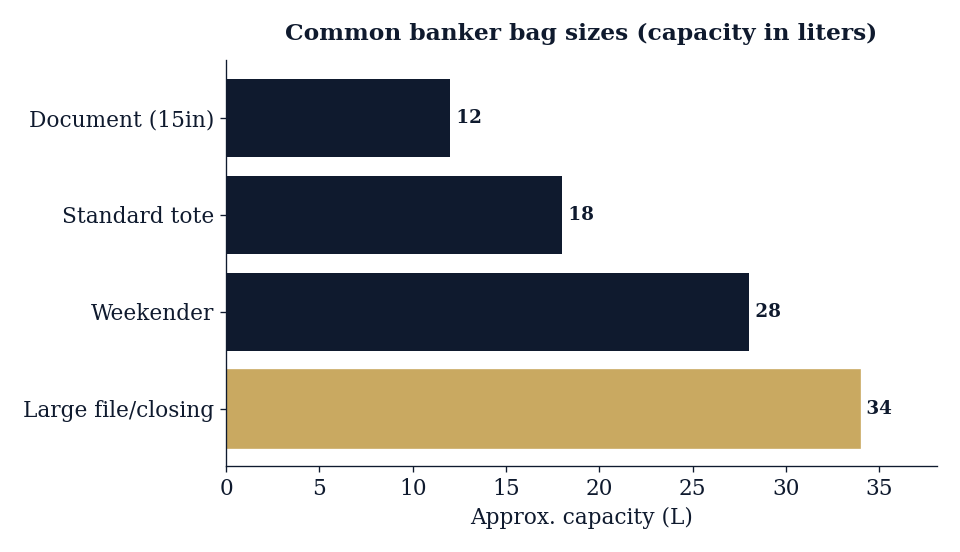
    Document and standard sizes cover most firm gifting; weekenders suit retreats and recruiting.
    Document and standard sizes cover most firm gifting; weekenders suit retreats and recruiting.
    • Document (≈15″): files, a tablet, a legal pad — ideal for closings and daily court use.
    • Standard tote: the everyday workhorse for associates and clients.
    • Weekender: recruiting, firm retreats, and MBA welcome bags.

    Branding: print, embroider, or patch

    How you decorate the bag changes both its cost and how premium it feels. Screen printing is crisp and
    economical; embroidery feels executive; a woven patch splits the difference with a tailored, heritage look.
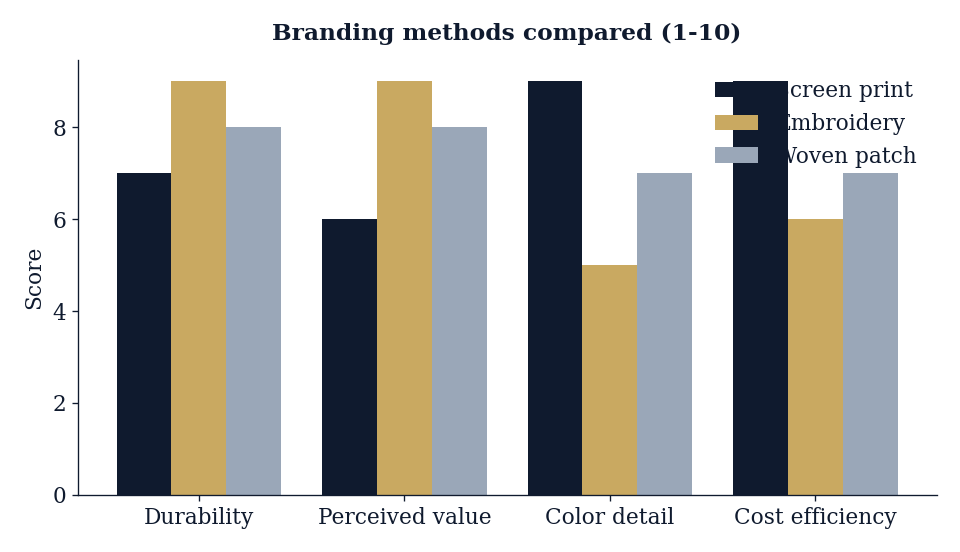
    Embroidery reads most premium; screen print wins on color detail and cost.
    Embroidery reads most premium; screen print wins on color detail and cost.
    Rule of thumb: screen print for volume and bright logos, embroidery for partner-level gifts, woven patch when you want a refined, understated mark.

    Spec’ing your order: a quick checklist

    1. Decide the job first

    Closing gift, recruiting bag, or event swag? The job sets the weight, size, and budget before you look
    at colors.

    2. Lock brand colors

    Supply exact thread or ink colors. A slightly-off navy undermines a firm’s whole identity.

    3. Order a pre-production sample

    For any meaningful quantity, approve a physical sample. Canvas color and stitch density read differently
    in hand than on screen.

    4. Plan lead time

    Embroidered, structured bags take longer than printed totes. Order well ahead of a closing season or
    recruiting cycle.

    Choosing what to actually give? See our guide to client appreciation gifts that don’t end up in a drawer, or compare options for accounting-firm gifting.

    Bottom line

    Great custom banker bags aren’t complicated — they’re just specified with intent. Choose 16 oz canvas or
    heavier for gifts meant to last, pick a size that matches what the recipient carries, and decorate in a
    method that fits the occasion and budget. Do that, and your firm’s bag becomes the one that’s still on a
    client’s shoulder long after the matter closes.

    Spec your firm’s banker bags

    Send your quantity, size, and branding preference — we’ll quote it and send a sample.

    Get a Firm Quote

    How it works ·
    Investment banks · Get a quote

  • Client Appreciation Gifts That Don’t End Up in a Drawer

    Client Appreciation Gifts That Don’t End Up in a Drawer

    Client Appreciation Gifts That Don’t End Up in a Drawer

    The hardest part of giving client appreciation gifts isn’t the budget — it’s the
    follow-through. Most firm gifts are opened, acknowledged with a polite email, and forgotten in a drawer by
    the next quarter. For law firms, investment banks, and accounting practices, that’s a missed branding touch
    and a wasted line item. The fix is choosing client appreciation gifts that get used in public,
    week after week, long after the thank-you note.

    Why most firm gifts fail

    Edible baskets disappear in a day. Logo pens vanish into desk caddies. Even nice desk accessories rarely
    leave the office. A gift only keeps working for your brand if the recipient carries it where other
    decision-makers see it — to court, to the closing table, to the partner meeting.

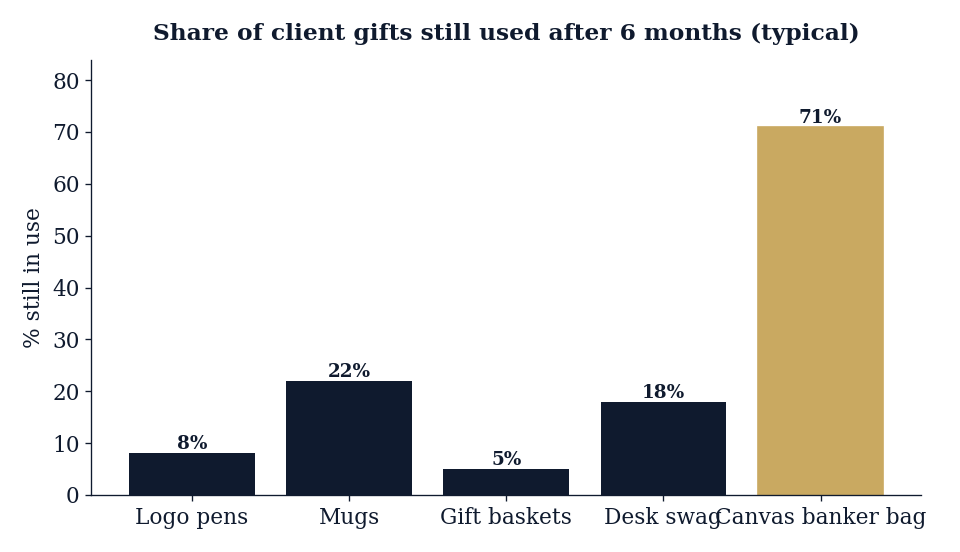
    A durable canvas bag stays in use far longer than typical desk swag.
    A durable canvas bag stays in use far longer than typical desk swag.

    The pattern is consistent: the more portable and genuinely useful the gift, the longer it survives.
    That’s the case for a well-made canvas banker bag — it travels, it carries documents, and it quietly
    displays your firm’s mark in exactly the rooms you want to be remembered in.

    Match the gift to the relationship

    Not every client warrants the same spend, and over-gifting can feel as awkward as under-gifting. A
    simple tiering keeps your program consistent and defensible.

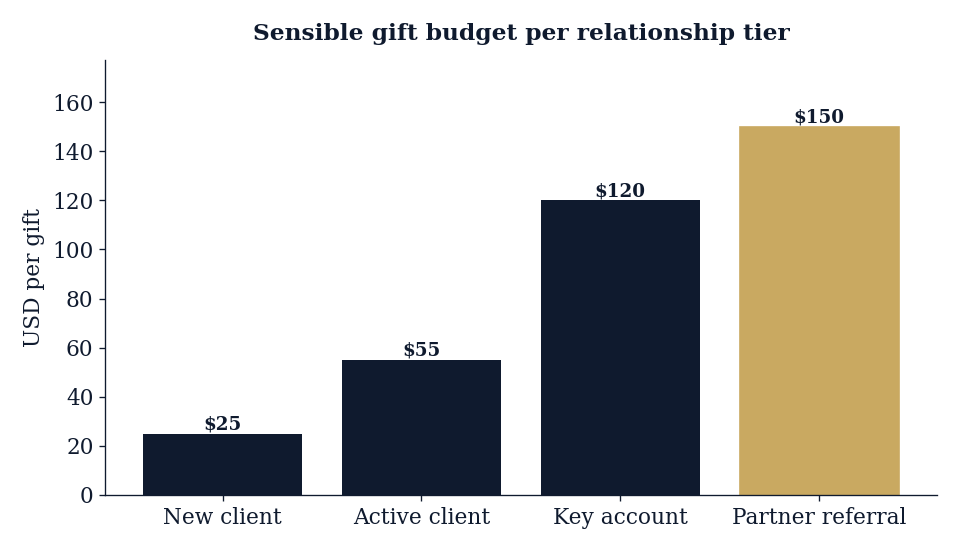
    Tier your gift budget so spend tracks the value of the relationship.
    Tier your gift budget so spend tracks the value of the relationship.
    Tax note: In the U.S., the business-gift deduction is generally limited to $25 per recipient per year, though branded items and certain promotional goods may be treated differently. Confirm with your firm’s accountant before finalizing a gifting budget.

    The test: will they still use it next year?

    Before approving any client gift, ask one question — will this still be in use twelve months from now?
    Run your shortlist against it and the winners are obvious.

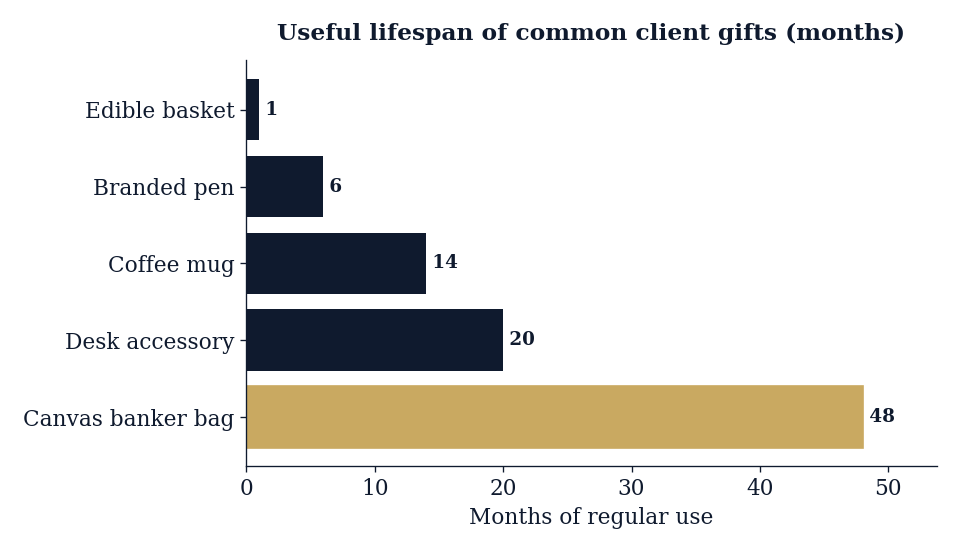
    Useful lifespan is the metric that actually predicts brand impressions.
    Useful lifespan is the metric that actually predicts brand impressions.

    A canvas banker bag clears the bar easily. It’s the kind of gift a managing partner keeps on the back of
    a chair and a client carries to every meeting — which is exactly why firms use them for
    law-firm client gifts, investment-bank welcome
    kits
    , and closing gifts.

    How to make it feel personal

    Embroider, don’t just print

    For partner-level and key-account gifts, embroidery reads as considered and survives years of use. Save
    screen printing for higher-volume associate or event gifting.

    Add a discreet monogram

    A recipient’s initials beside your firm mark turns a branded item into a personal one — and dramatically
    raises the odds it’s carried daily.

    Mind the timing

    Year-end is crowded. A gift that lands at matter close, a deal signing, or a work anniversary stands out
    far more than one in the December pile.

    New to custom bags? Our companion guide breaks down canvas weights, sizes, and branding methods so you can spec a bag that lasts. Or see how ordering works.

    Bottom line

    The best client appreciation gifts aren’t the most expensive — they’re the ones that stay in the
    recipient’s hand. For firms whose brand lives on trust and visibility, a durable, embroidered canvas banker
    bag does double duty: a genuinely useful gift, and a quiet ambassador in every room your clients walk into.
    Tier the budget, personalize the detail, and time it well, and your gifting line item starts paying you
    back.

    Build a client-gifting program that sticks

    Tell us your firm type and quantities — we’ll spec bags and pricing for each tier.

    Get a Firm Quote

    How it works ·
    Wealth management · Get a quote

  • Real Estate Closing Gifts That Win Referrals

    Real Estate Closing Gifts That Win Referrals

    Real Estate Closing Gifts That Win Referrals

    The right real estate closing gifts do more than mark the end of a deal — they start the next one. A thoughtful gift at closing is the last impression a client carries into every conversation they have about their move, and for an agent who lives on referrals, that impression is marketing that compounds. This guide covers real estate closing gifts that clients keep and show off, what to spend, and how to make the gesture feel personal at scale.

    Most agents either skip the gift or default to a generic bottle of wine. Better real estate closing gifts are useful, branded with restraint, and tied to the home — so they live in the house and keep your name in view.

    What makes a closing gift work

    A great closing gift is kept, used, and seen by the client’s guests. That rules out anything disposable and rules in pieces that live in the entryway or on the counter: a quality bag, a cutting board, a doormat, a desk piece for the home office.

    Gift Kept & visible? Referral pull Budget
    Monogrammed canvas bag Carried daily High $$
    Engraved cutting board On the counter Medium $$
    Custom doormat At the door Medium $
    Wine / consumable Gone in a week Low $

    How much to spend

    A common guideline is to budget a small percentage of your commission for the closing gift, scaled to the deal. The goal is a gift that feels generous relative to the relationship, not a fixed dollar figure.

    Starter-home buyerModest, useful
    Move-up buyerMid-tier keepsake
    Luxury / repeat clientPremium piece
    Note: some brokerages and jurisdictions cap client gift values or have RESPA-related rules — confirm your limits before standardizing a high-value gift program.

    Make it personal at scale

    InitialsMonogram the client, not just your brokerage logo
    The homeAdd the address or close date as a keepsake detail
    RestraintA subtle mark beats a billboard logo every time

    Build a repeatable program

    The agents who win on referrals do not reinvent the gift each time. They pick one or two signature real estate closing gifts, order them in small batches, and personalize per client. A monogrammed canvas bag works because it is carried in public, ages well, and suits any buyer from a first condo to a luxury close.

    Choose a gift that lives in the home or on the client, personalize it, and give it the moment the deal closes — and your closing gift becomes a quiet referral engine long after move-in day.

    Building your closing-gift lineup?

    Get a Firm Quote

    More: see how it works, options for real estate closings, or our client gift ideas for law & finance firms.

  • Client Gift Ideas for Law Firms and Finance Practices

    Client Gift Ideas for Law Firms and Finance Practices

    Client Gift Ideas for Law Firms and Finance Practices

    The best client gift ideas in professional services do one quiet thing extremely well: they keep your firm top of mind without ever feeling like swag. For a law firm, a wealth manager, or an accounting practice, a gift is a brand impression that sits on a client’s desk for years — so it has to look the part. This guide covers client gift ideas that match the gravitas of finance and legal work, when to give them, and how to brief a vendor so the result feels bespoke rather than bulk-ordered.

    Done right, client gift ideas in these industries pay for themselves in referrals and retention. Done wrong, they end up in a drawer. The difference is usually material, restraint, and timing.

    What makes a professional-services gift work

    Three tests separate a memorable gift from forgettable merch: is it genuinely useful, does it look understated and premium, and does it carry your mark without shouting? A heavy canvas banker bag, a leather portfolio, or a quality desk piece passes all three. A plastic stress ball passes none.

    Gift Perceived value Daily visibility Best moment
    Custom canvas banker bag High High Onboarding, deal close
    Leather portfolio High Medium Partner gifts
    Branded drinkware Medium High Welcome kits
    Desk accessory Medium High Year-end

    Client gift ideas by firm type

    LawClosing gifts, new-client welcome bags, partner recognition
    BankingDeal mementos, MBA recruiting bags, analyst welcome kits
    WealthOnboarding gifts that signal a long relationship
    AccountingPost-tax-season thank-yous and audit-close gifts

    Why a canvas banker bag travels well

    A sturdy, monogrammed canvas bag is the rare gift a finance or legal client actually carries — to the office, to court, to the gym. That mobility multiplies impressions far beyond a desk item, and the heritage look reads as considered, not promotional.

    Timing: the most underrated factor

    The moment you give matters as much as what you give. Welcome gifts cement a new relationship; closing or deal gifts mark a milestone the client already feels good about; year-end gifts say thank-you when competitors are silent.

    New-client onboardingBest for retention
    Deal / matter closeBest for referrals
    Year-end appreciationBest for goodwill
    Tip: avoid gifting around regulated periods or anything that could read as inducement — keep professional-services gifts modest, branded subtly, and tied to a relationship milestone.

    How to make it feel bespoke

    Personalization is what turns a bulk order into a gift. Add the client’s initials, choose a restrained mark over a giant logo, and pick materials that age well. Order in tiers — a premium piece for key relationships, a solid mid-tier item for the broader book — so your best client gift ideas land where they matter most.

    Match the gift to the firm, the moment to the milestone, and the finish to your brand, and a simple object becomes a years-long reminder of who delivered for them.

    Outfitting your firm’s gifting program?

    Get a Firm Quote

    More: see how it works, explore options for law firms, or read our guide to real estate closing gifts.

  • Law Firm & Corporate Gift Bags: Banker Bags for Client Gifting

    Law Firm & Corporate Gift Bags: Banker Bags for Client Gifting

    For law firms, banks, and professional services, corporate gift bags are a chance to express the brand’s taste, and a cheap pen does the opposite. A custom banker bag is the rare corporate gift that feels substantial without being flashy: refined canvas, a quiet monogram, and a usefulness that keeps it in circulation. This guide covers how firms use branded banker bags for client gifting, partner gifts, and new-hire welcomes.

    In professional services the gift is a reflection of the firm. Something durable and understated signals exactly the qualities a client wants to associate with their lawyer, banker, or advisor.

    Where Firms Use Banker Bags

    The same well-made bag serves several gifting moments, which is what makes it efficient for a firm to standardize on. From client appreciation to recruiting, it adapts without ever looking like leftover swag.

    Occasion Recipient Personal touch
    Client appreciation Key clients Client initials
    Partner / milestone Partners, staff Anniversary year
    New-hire welcome Incoming associates Firm crest
    MBA / campus recruiting Candidates Program name

    One refined bag covers client, partner, and recruiting gifts across the firm.

    Client and Partner Gifts

    For client gifting, a banker bag says thank you in a way that lingers, because the client actually uses it. For partners and senior staff, an anniversary or milestone detail turns the bag into recognition. In both cases the understated look matches the professionalism clients expect from the firm.

    New-Hire and Recruiting Welcomes

    A branded banker bag in a new associate’s welcome kit sets a polished tone on day one, and the same bag works beautifully in campus and MBA recruiting, where a tasteful, useful gift helps a firm stand out from competitors handing out yet another water bottle. Candidates keep what is genuinely nice, and your firm name travels with it.

    Standardize and Order in Volume

    Firms get the most value by settling on one or two refined designs they can personalize as needed, then ordering in volume to control cost and guarantee a consistent look. Keep a stock on hand so client, partner, and recruiting gifts are always ready without a rush order. Consistency across every bag is what makes the program look intentional.

    Get a Firm Quote

    Building a firm gifting program? CustomBankerBags makes refined canvas bags for law firms and finance. See how it works or get a quote.

    Working in real estate? Read our guide to real estate closing gifts.

  • Real Estate Closing Gifts: Why a Custom Banker Bag Lasts

    Real Estate Closing Gifts: Why a Custom Banker Bag Lasts

    The best real estate closing gifts walk the line between memorable and useful, and most miss it. A bottle gets consumed and forgotten; a generic gift card says nothing about you. A custom banker bag, by contrast, is something a client carries for years, a tasteful, durable canvas tote that quietly keeps your name in their hands long after the keys change owners. This guide explains why banker bags have become a favorite closing gift for agents who want to be remembered.

    A closing gift is really a referral tool. The goal is a gift good enough that the client keeps it, uses it, and is reminded of you the next time someone they know is buying or selling.

    What Makes a Closing Gift Work

    A closing gift succeeds when it is useful enough to keep, nice enough to feel personal, and subtle enough that the branding never feels like an ad. Banker bags hit all three: they are genuinely handy, they look refined, and a tasteful monogram reads as a gift rather than a billboard.

    Gift Kept & used? Keeps you top of mind?
    Wine / food Consumed once No
    Gift card Spent & gone No
    Generic tote Sometimes Rarely
    Custom banker bag For years Yes

    A gift that gets used for years quietly markets you long after closing day.

    Why Banker Bags Specifically

    The banker bag, a sturdy canvas tote with reinforced handles, earns its keep because it is endlessly practical: groceries, the gym, the beach, the office. It looks understated and professional, which suits the relationship, and it ages well. Every time the client reaches for it, your name and a thank-you ride along.

    Personalize With Restraint

    The strongest version pairs the client’s monogram or new address with a small, tasteful mark of your brokerage rather than a giant logo. Make the client the hero of the gift and keep your branding secondary, and the bag feels like a genuine thank-you instead of marketing. Quality canvas and clean stitching signal that you spent thought, not just money.

    Order Ahead for Closings

    Closings cluster and deadlines are firm, so keep a small inventory of branded banker bags on hand, or order a batch with a consistent design you can personalize quickly. That way a gift is always ready the moment a deal closes, and you never scramble for a last-minute token. Buying in a batch also keeps the per-bag cost efficient.

    Get a Firm Quote

    Want a closing gift clients keep? CustomBankerBags makes tasteful, durable canvas bags for real estate teams. See how it works, explore options for real estate closings, or get a quote.

    Gifting for a firm instead? Read our guide to law firm and corporate gift bags.

  • Heritage vs. Modern: A Buyer Guide to Banker Bag Construction

    Heritage vs. Modern: A Buyer Guide to Banker Bag Construction

    A practical buyer’s guide to banker bag construction for finance, legal, and corporate-gifting buyers. The decisions that actually affect how the bag looks, feels, and survives, ranked from “matters a lot” to “marketing fluff.”

    What heritage means in this context

    “Heritage” is a marketing word that has been applied to so many products it has lost meaning. In banker bag construction it has a specific definition: a heritage-spec bag uses materials and construction methods that match what the original banker bags looked like in the early twentieth century — heavyweight cotton canvas, brass hardware, leather trim, and cotton-webbing handles. Modern-spec bags use lighter polyester blends, plastic hardware, faux leather, and synthetic webbing.

    Both can be well-made. But they read differently in the hand, age differently, and signal different things about the firm that bought them.

    Canvas weight: the single most important spec

    Canvas weight is measured in ounces per square yard. The most common weights are:

    • 10–12oz: Lightweight, used for promotional totes. Will not last more than a year of daily use.
    • 14–16oz: Mid-weight, used in mass-market canvas bags. Adequate for occasional use, not for daily commute.
    • 18oz: The heritage banker bag standard. Structured, pre-washed for drape, holds shape after years.
    • 22oz: Premium weight, used in heritage-leaning builds with leather trim. Heavier than a leather briefcase but holds more.

    If your bag is going to be carried daily for years, anything under 18oz is a false economy.

    Hardware: brass vs. nickel vs. plastic

    Hardware reads from across the room. Solid brass or antique-brass hardware (snaps, rivets, D-rings) is the heritage standard. Nickel and chrome are modern alternatives that signal “industrial” rather than “intentional.” Plastic hardware appears on promotional bags and signals “promo” regardless of the canvas quality.

    For a partner-level gift, specify solid brass hardware. The cost difference is roughly $2–$4 per bag and it changes how the bag reads in a partner’s office.

    Macro photo comparing brass-tone hardware on heavyweight canvas versus chrome plastic hardware on lightweight canvas
    Image placeholder

    Decoration: embroidery vs. screen-print vs. heat transfer

    Three decoration methods dominate the industry. Each has a different look, durability, and price point.

    Embroidery

    Stitched directly into the canvas. Survives indefinitely. Reads as heritage and “intentional.” Best for logos with limited color counts and clean geometric shapes. Tone-on-tone embroidery (thread matched to canvas) is the partner-gift standard.

    Screen-print

    Ink applied through a screen, baked onto the canvas. Survives 5–10 years of normal use. Better for logos with many colors, gradients, or photographic detail. Reads more modern than embroidery.

    Heat transfer

    A printed film pressed onto the canvas with heat. Survives 1–2 years before cracking. Avoid for any premium application. Only acceptable on high-volume conference giveaways where the bag is expected to be disposable.

    Handles and webbing

    The handle is the part that fails first on a poorly built bag. Heritage bags use cotton webbing reinforced with a leather wrap at the attachment point, or full leather handles riveted through the canvas. Lower-spec bags use polyester webbing with stitched-only attachment — these tear out within a year of daily use carrying a laptop.

    Key takeaway

    Spec for the spec choices that matter (canvas weight, hardware finish, decoration method, handle attachment) and ignore the marketing fluff (eco-friendly inks, “vegan leather” claims, recycled-content percentages under 30%). A well-made 18oz heritage canvas bag with brass hardware and embroidered logo will outperform any “premium organic recycled” lightweight tote on every measurable metric.

    Lining: when it matters

    Most banker bags are unlined — the interior is the inside face of the canvas. For premium and law-firm builds, a contrast lining (waxed cotton, herringbone, or houndstooth) elevates the bag and adds structure. Lining adds roughly $8–$15 per bag at quantity.

    Closure: the function-vs.-form decision

    Open-top bags are the original banker spec and feel the most heritage. Zip closures are functional but read more modern. Snap closures split the difference. Leather-trim flap closures with a buckle are the top tier — only used on the premium partner-gift builds.

    The final test

    Before approving the spec, request a single pre-production sample. Hold the bag in the hand. Try the closure. Load it with a laptop. If the bag feels like a working object you would carry yourself, it will land with the recipient. If it feels like swag, it will land like swag.

    Ready to spec a heritage banker bag?

    We will recommend the right canvas weight, hardware, and decoration for your audience and quantity. Free mockups within one business day.

    Get a Quote
  • Closing-Day Gifts That Actually Mean Something: The Real Estate Banker Bag

    Closing-Day Gifts That Actually Mean Something: The Real Estate Banker Bag

    The Lucite paperweight with the property address etched on it is having its last decade. High-end residential and commercial brokerages are quietly switching to closing-day banker bags — heritage canvas bags personalized with the property address, closing date, or buyer family name. Here is what they look like and what they cost.

    Why the Lucite gift is fading

    For thirty years the closing gift in real estate was a Lucite paperweight with the property address etched on it, sometimes accompanied by a deal-toy keychain or a desk clock. The buyers loved them in the 1990s. They tolerated them in the 2000s. By 2020 they were quietly shelving them in a closet within a year of closing.

    The problem is not the sentiment — clients appreciate the gesture — it is the form factor. A Lucite block has no daily use. It collects dust until the homeowner moves again and discovers it during the pack-up. Then it gets discarded.

    The closing-day banker bag

    What works instead: a heritage canvas banker bag, cream or oxblood, leather-trimmed handles, with a small debossed leather patch on the exterior carrying the property address in restrained type. On the interior, a discreet embroidery line reads something like “Closed June 1, 2026” or the buyer family name.

    The result is a gift the client carries. Buyers use it for weekend errands, weekday gym kits, kids’ sports bags. Every time they pick it up they re-encounter the closing — and the broker name on the inside pocket.

    Photo of a cream canvas banker bag with leather trim and embossed property address detail, on a kitchen counter beside house keys
    Image placeholder

    How brokerages structure the gift

    The standard playbook at the firms we work with: the bag is presented at closing alongside the keys in a custom presentation box. The broker hands it over with a brief note about the property and a card with their direct line for future referrals.

    The cost structure varies by transaction size. For a residential closing under $1M, brokerages typically spend $90–$130 on the bag (canvas-only with leather trim, embroidered interior detail). For luxury residential ($5M+) and high-end commercial closings, the gift moves into the $180–$260 range with full premium leather trim, presentation box, and per-bag personalization.

    Commercial real estate deal teams

    For commercial transactions on $50M+ deals, the entire team often receives matching bags — the broker, the deal attorney, the lender, the buyer-side principal, and sometimes the seller’s representative. The bag becomes the M&A deal toy reimagined: a private memento, not a desk display.

    The interior embroidery usually carries the deal name (the property address or project name), the closing date, and sometimes the deal value. Each recipient gets a bag identical except for the exterior personalization — their own initials or firm mark.

    Key takeaway

    The closing gift is not just about the moment of handoff — it is about the next 5 years of referrals. A gift the client carries weekly is a 250-impression-per-year touchpoint. A gift they shelve is a one-impression gift. The economics of switching are obvious once you do the math.

    Single-bag and small-batch ordering

    We regularly run single-bag closing orders for high-end residential brokerages. The minimum is one. The production process is the same as a 500-bag order — free mockup within 48 hours, three weeks production, full inspection and proof photos before shipping. The unit cost is higher than at scale, but the gift is targeted and the broker can charge it directly to the closing’s marketing budget.

    What to send to start

    For a closing-day order: send the property address, the closing date, the buyer’s family name (or company name for commercial), your brokerage logo, and any style preferences (canvas color, leather color). We will mock up two or three layouts within 48 hours so you can pick the one that fits the buyer’s aesthetic.

    Ready to spec a closing gift?

    One bag or twenty — we treat closing-day orders with the same care as five-figure runs. Free mockups within one business day.

    Get a Quote
  • Banker Bags Are Back: Why Finance Firms Are Replacing Tote-Bag Welcome Kits

    Banker Bags Are Back: Why Finance Firms Are Replacing Tote-Bag Welcome Kits

    The branded tote bag is having its last decade in finance, and the heritage banker bag is quietly replacing it — in analyst-class welcome kits at bulge brackets, in partner gifts at Big Four firms, and in client closing presents on the law firm side. Here is why the swap is happening and what it costs.

    The tote bag problem

    Walk through the lobby of any investment bank on a summer Monday and count the totes. Most are visibly thin, the printing is already cracking, and the recipient is carrying them only because their badge is clipped to the strap. The promo-catalog tote is a single-use object in a multi-year recruiting cycle, which is exactly the wrong product for the firms that send it.

    The economics make this worse. A typical 12oz canvas tote runs $8–$12 per unit at quantity, but the recipient throws it out within a year. Cost per impression after 18 months: effectively infinite, because the bag is in a trash can.

    Why the banker bag is back

    The banker bag was the working bag of accountants and bank couriers in the early twentieth century — heavyweight canvas, reinforced webbing handles, a wide opening that fit ledgers and file folders. It was built to last a career, not a recruiting season. Modern firms are rediscovering the silhouette because it solves the problem the tote cannot: it looks like a real object, not a swag handout.

    The shift started at the partner-gift level (small volume, high attention to detail) and has now moved into analyst-class onboarding (high volume, but with firms willing to spend $50–$80 per unit for a bag the recruit will actually use). When the bag survives ten weeks of summer-internship daily use, it converts from “swag” to “credential” — and the credential becomes a recruiting touchpoint every time the analyst meets a college friend for drinks.

    Editorial photo of a navy 18oz banker bag with brass hardware and embroidered firm seal on a walnut conference table
    Image placeholder

    The four spec choices that matter

    Most firms over-engineer features that no one notices and under-spend on the features that turn a working bag into a heritage object. The four decisions that move the needle:

    1. Canvas weight

    18oz pre-washed cotton canvas is the floor. Lightweight 10–12oz fails the structural test within 12 months of daily commute use. The premium tier is 22oz with leather trim, used for partner-anniversary gifts.

    2. Decoration method

    Embroidery beats screen-print for retention. Stitched logos survive years of laundry and rubbing; screen-printed logos crack and fade. Tone-on-tone embroidery (matching the canvas color) reads as heritage rather than corporate.

    3. Hardware finish

    Brass-tone or antique-brass hardware reads as “intentional” next to a leather portfolio. Chrome hardware reads as “swag.” The cost difference is roughly $2 per bag and it changes the entire visual register of the gift.

    4. Closure style

    Open-top bags work for analyst-class volume. Zip closures are the default for partner gifts. Leather-flap closures with a buckle are reserved for the top-tier partner-gift run — usually 50 units or fewer.

    Key takeaway

    Replacing the tote with a banker bag changes the cost per impression dramatically. A $65 embroidered canvas banker bag used daily for three years lands at roughly six cents per impression. A $10 tote thrown out in six months lands at infinity per impression. The math is not close.

    What firms are spending

    At the analyst-class welcome-kit level, firms are landing in the $45–$75 per-bag range for 500–2,500 unit orders. Bulge brackets like Goldman and Morgan Stanley typically spec higher (closer to $75 with leather trim) and middle-market boutiques run closer to $45 (canvas-only with embroidered seal).

    At the partner-gift level, firms move into the $90–$160 per-bag range for 25–100 unit orders with full leather trim, debossed leather patches, and presentation boxes. The bag is the gift; the box and tissue are part of the experience.

    For one-off closing gifts on M&A deals, the spec is whatever the deal team wants — we have done single-bag runs with deal name and date embroidered inside the flap for under $200 all-in.

    The recruiting lift

    One bulge-bracket recruiting lead reported a measurable lift in second-round acceptance after switching from a screen-printed tote to an embroidered canvas banker bag for first-round-interview swag. Not because the bag closed the candidate, but because it removed a signal that the firm was treating recruiting as a cost center. A heritage-feeling bag tells the candidate “we will invest in you” before the partner conversation even starts.

    How to start

    If your firm is on a fall partner-gift or summer-intern cycle, the practical path is: send your logo, request a free mockup, get a sample to the office managing partner for hands-on approval, then lock the spec for annual reorder. Most firms hit the entire cycle in five weeks — three of those weeks are production.

    Ready to spec your firm bag?

    Send your firm name, logo file, and a target quantity. Free mockups within one business day.

    Get a Quote

Our Family of Brands